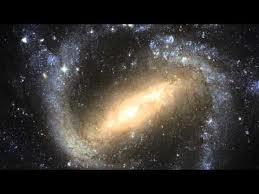


EALING: A team of Caltech astronomers searching for the oldest objects in the cosmos report that they have spotted the most distant galaxy ever found. The galaxy called EGS8p7 which is more than 13.2 billion years old challenges the current theories about the evolution of the early universe.
Scientists have long theorized that first galaxies evolved roughly 500 million years after the Big Bang, the new discovery may challenge the currently established timeline of the cosmos.
Astrophysicists Adi Zitrin, a Hubble postdoctoral scholar in astronomy, and Richard Ellis, professor of astrophysics at University College London first spotted EGS8p7 using the Hubble and Spitzer space telescopes. But their spectral analysis yielded some surprising results.
The discovery was published on August 28, 2015 in Astrophysical Journal Letters by Adi Zitrin, a NASA Hubble Post-doctoral Scholar in Astronomy and colleague Richard Ellis who recently retired after 15 years at Caltech and is now a professor of astrophysics at University College of London.
According to Zitrin the team is currently doing more thorough calculations to establish if the time-line of re-ionization needs to be revised. The time-line plays a major role in better understanding the evolution of the universe.
EGS8p7 was identified by the Hubble Space Telescope and selected as a candidate for investigation based on data gathered by both Hubble and the Spitzer Space Telescope.
The universe itself is currently believed to be 13.8 billion years old and the study confirms earlier revisions of the earliest galaxy formations thought to be possible as early as 200 million years after the Big Bang.

Karachi Port sets 138-year cargo handling record
KARACHI: Pakistan's maritime sector has achieved a major milestone as Karachi Port set a new record in its 138-year history...