You might also like


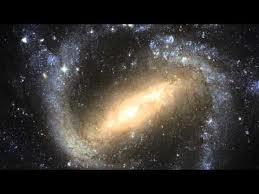
PARIS: The secrets of the Big Bang and the formation of the universe are one step closer to being revealed after astronomers discovered the most far-flung galaxy so far observed in the universe.
The galaxy, given the name EGSY8p7, is around 13.2 billion light-years away from Earth. In other words, light from the galaxy takes 13.2 billion years to reach Earth. The Big Bang theory, currently considered the leading explanation as to how the universe began, posits that the universe expanded from a single point in space around 13.8 billion years ago. That means astronomers here on Earth are able to view the new galaxy just 600 million years after it came into being.
The discovery was made by a team from the California Institute of Technology using the W. M. Keck Observatory in Hawaii. The team dated EGSY8p7 by recording its Lyman-alpha emission line—a trail of hot hydrogen gas heated up by ultraviolet (UV) radiation emitted by the galaxy’s newborn stars. The presence of the Lyman-alpha line was unexpected: while it is frequently detected in galaxies closer to Earth, the team thought that EGSY8p7’s emission line would have been absorbed when the universe was formed by the hydrogen atoms believed to inhabit the space between galaxies.