

Customs Today
  • Home
  • Islamabad
  • Karachi
  • Lahore
  • National
  • Transfers and Postings
  • Chambers & Associations
  • Business
No Result
View All Result
Customs Today
  • Home
  • Islamabad
  • Karachi
  • Lahore
  • National
  • Transfers and Postings
  • Chambers & Associations
  • Business
No Result
View All Result
Customs Today
No Result
View All Result
Home Science & Technology Science

Astronomers find a massive gas-giant world

byCustoms Today Report
16/07/2015
in Science, Science & Technology
Share on FacebookShare on Twitter

You might also like

Tesla driverless system to use updated radar technology

12/09/2016

Apple to develop its own self-driving technology

10/09/2016

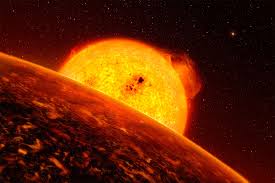
PARIS: You know the trouble with regular exoplanets. They’re mostly much too massive and much too close to their suns, hence much too hot and, in general, not that great. But maybe not this time.
Excited astronomers say that they have found a massive gas-giant world, almost a twin to our own Jupiter, orbiting a very Sun-like yellow star with the groovy cognomen HIP 11915 which lies some 186 lightyears away in the constellation Cetus.
That doesn’t sound all that exciting: but it is, because it means – according to current theories of planetary formation – that HIP 11915 is likely to have smaller rocky planets closer in, much as our own Sun does. Such planets would be much more like Venus and Mars – or better still, Earth – than most known exoplanets are.
“After two decades of hunting for exoplanets, we are finally beginning to see long-period gas giant planets similar to those in our own Solar System,” enthuses astroboffin Megan Bedell of Chicago uni, one of the discoverers of HIP 11915. “This discovery is, in every respect, an exciting sign that other solar systems may be out there waiting to be discovered.”
Bedell and her colleagues detected the far-out gas giant using the High Accuracy Radial velocity Planet Searcher (HARPS) instrument attached to the mighty 3.6m telescope of the European Southern Observatory’s La Silla facility, in the high Atacama Desert of Chile. HARPS spied out the gas giant by detecting the slight wobble it imposes on HIP 11915 as it swings around the star.

Related Stories

Tesla driverless system to use updated radar technology

byCT Report
12/09/2016

WASHINGTON: Electric carmaker Tesla announced Sunday it was upgrading its Autopilot software to use more advanced radar technology. In a...

Apple to develop its own self-driving technology

byCT Report
10/09/2016

SAN FRANCISCO: Apple may not become an automaker, but it still wants to develop its own self-driving technology. The iPhone-maker's...

NASA spots slowest known magnetar

byCT Report
10/09/2016

WASHINGTON: Astronomers have found evidence of a magnetar - magnetised neutron star - that spins much slower than the slowest...

‘YouTubers’ outshining old-school television

byCT Report
09/08/2016

SAN FRANCISCO: A media revolution is taking place, and most people over 35 years of age aren’t tuned in. Millennial...

Next Post

Indian customs probe gold smuggling at Nedumbassery airport

  • Terms and Conditions
  • Disclaimer

© 2011 Customs Today -World's first newspaper on customs. Customs Today.

No Result
View All Result
  • Transfers and Postings
  • Latest News
  • Karachi
  • Islamabad
  • Lahore
  • National
  • Chambers & Associations
  • Business
  • About Us

© 2011 Customs Today -World's first newspaper on customs. Customs Today.