

NEW YORK: They’re a cross between asteroids and comets and they bear the name of the man-horse hybrid from Greek mythology: centaur.
Relegated to an otherwise mundane section of our solar system, none of these rocky bodies has ever been observed up close. Their life span in the solar system is relatively short as well. Because of their erratic orbits, scientists believe, centaurs eventually fall into the sun or exit the solar system over a period of millions of years.
But there may be new cause for interest in these rocky wanderers.
Recently, astronomers announced that data collected on the centaur Chiron as it passed in front of a bright star in 2011 suggest that it may possess a circulating disk of debris — albeit invisible to Earthlings.
“It’s interesting, because Chiron is a centaur — part of that middle section of the solar system, between Jupiter and Pluto, where we originally weren’t thinking things would be active, but it’s turning out things are quite active,” said Amanda Bosh, an MIT astronomer and a coauthor of a study published Monday in the journal Icarus.
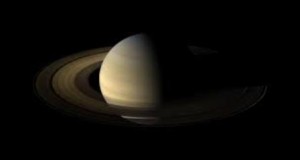
If Chiron has a system of rings, it would join five other bodies in our solar system known to have such a feature: Saturn, Jupiter, Uranus, Neptune and another centaur called Chariklo.
“Until Chariklo’s rings were found, it was commonly believed that these smaller bodies don’t have ring systems,” Bosh said. “If Chiron has a ring system, it will show it’s more common than previously thought.”
Scientists estimate that there are roughly 44,000 centaurs in the solar system and that most occupy the same orbital band.

Sindh CM Murad Ali Shah, China’s Hubei province eye stronger trade, tech ties
WUHAN: Sindh Chief Minister Syed Murad Ali Shah met with senior officials of China’s Hubei province to expand cooperation in...