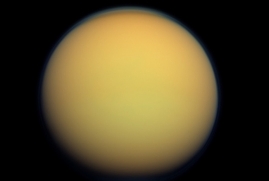
BRENT: A team of astrophysicists from Toronto have been working to solve the mystery of the missing planet.
“Our evidence points to Jupiter”, Ryan Cloutier, a PhD candidate in University of Toronto’s Department of Astronomy & Astrophysics, said in a statement. However, because the planets and moon move in orbits that are not highly different from that of Earth’s, these celestial bodies constantly remain close to the ecliptic line when it is visible in the sky. Their reasoning is based off of the fact that there are discrepancies in the orbit of Earth and Mars – if eight planets are all there’s ever been, both planets shouldn’t technically be in their current positions in the solar system.


“Ultimately, we found that Jupiter is capable of ejecting the fifth giant planet while retaining a moon with the orbit of Callisto”, said Cloutier.
- If you like viewing the night sky, Saturday morning November 7th is your chance to witness a spectacular conjunction and alignment of two planets with the moon.
To come to their conclusions, the researchers used computer simulations of the four giant planets in our solar systems as well as their moons. It is also possible that this ice giant had a rough trip out of the solar system.
Earlier research suggested that the planet that would have been our ninth (or tenth, had we still considered Pluto as an actual planet) had been pulled from the Sun’s gravitational pull after having a run-in with another gas giant.
astrophysicists from Toronto have been working to solve the mystery of the missing planet