

EUROPE: Through building a quantum logic gate in silicon for the first time, an Australian team of engineers has made it possible to calculate between two quantum bits (qubits) of information and therefore cleared the last hurdle in making silicon quantum computing happen.
The significant milestone – dubbed a “game changer” by team leader Andrew Dzurak, director of the Australian National Fabrication Facility and professor at the University of New South Wales (UNSW) – is reported in the journal Nature last Oct. 5.
The team from UNSW claims to have demonstrated a two-qubit logic gate, a quantum computer’s central building block, and have “significantly done it in silicon.”
“[W]e believe it will be much easier to manufacture a full-scale processor chip than for any of the leading designs, which rely on more exotic technologies,” explained Dzurak, highlighting that they use practically the same device technology as computer chips in existence today.
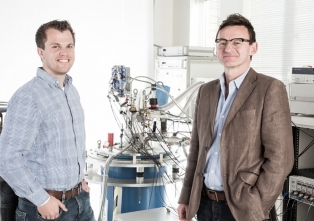
UNSW research fellow Menno Veldhorst is the lead author of the Nature study. Other experts in the team include research fellow Henry Yang and Associate Professor Andrea Morello, both from UNSW’s School of Electrical Engineering and Telecommunications, and Professor Kohei M. Itoh of Keio University in Japan, who provided specialized silicon wafers for the endeavor.
This breakthrough is believed to make building a quantum computer much more viable, as it follows the manufacturing technology of the computer sector today.
The research is deemed to break down the final barrier in realizing the potential of super-powerful silicone quantum computers, using subatomic particles in addressing computing challenges that even the fastest supercomputers at present cannot solve.

Karachi Port sets 138-year cargo handling record
KARACHI: Pakistan's maritime sector has achieved a major milestone as Karachi Port set a new record in its 138-year history...