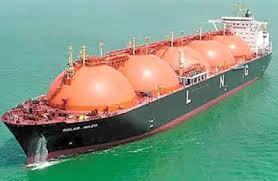
MELBOURNE: The Australian government on Monday warned that the country’s east faced a worse-than-expected natural gas shortfall in 2018, but the competition watchdog said the gap could easily be filled by diverting uncontracted exports to the local market. It is now up to the government to decide by Nov. 1 whether to pull the trigger on its Australian Domestic Gas Security Mechanism, which allows it to curb liquefied natural gas (LNG) exports from the nation’s east coast if it determines there will be a shortfall in any year.
The supply gap identified by Australian Energy Market Operator of between 54 petajoules and 107 PJs is equivalent to about 4 percent to 9 percent of the natural gas projected to be used by the LNG plants. “To curb LNG production by 4 to 9 percent is a substantial curb,” said Saul Kavonic, an analyst with energy consultants Wood Mackenzie. Up to now, the three east coast gas exporters – Queensland Curtis LNG (QCLNG) run by Royal Dutch Shell, Australia Pacific LNG (APLNG) run by ConocoPhillips and Origin Energy, and Gladstone LNG run by Santos Ltd – had all seen Gladstone as the most vulnerable to any controls. That was because the regulation puts the onus on any exporter taking gas from the local market beyond its own production to fill LNG contracts. Gladstone is the only plant taking extra gas from the domestic market. But the Australian Competition and Consumer Commission’s report to the government on Monday, which along with a report from the Australian Energy Market Operator will be the basis for imposing any export curbs, questioned why 63 petajoules of gas was destined for the international spot market in 2018, when it could fetch more locally. That effectively turned the spotlight on QCLNG and APLNG as well. Both have more than their contracted volumes to sell on the spot market. APLNG and Shell, looking to avert export controls, said on Monday they would do what they could to boost domestic supply. “Our first preference for flexible excess gas volumes is to sell it on the domestic market,” Shell Australia vice president Tony Nunan said in emailed comments.

APLNG said it expects to supply around 173 petajoules into the local market in 2017 and is “actively marketing” volumes above its contract obligations in the domestic market for 2018. Shell said it would sell between 75 and 90 PJs into Australia’s east coast market this year. Gladstone LNG still has the most to lose, if it is forced to divert some of its contracted volumes. It would lose out on sales that have been locked in at around 14.5 percent of Brent oil prices, or around $8.75 per million British thermal units (mmBtu) currently, compared with spot Asian LNG prices at $7.50 per mmBtu. “There’s a material loss to the LNG (joint venture) if they have to take less volumes,” said Kavonic. “For the others ones (APLNG and QCLNG) the opportunity cost is the spot price, which is lower,” he said. Santos had no comment as of late Monday. The competition watchdog also highlighted the supply gap was partly due to a 26 percent drop in output projected in 2018 from the mainstay supplier to Australia’s south, ExxonMobil Corp and BHP’s Gippsland Basin joint venture.