
CANBERRA: Greater investment in China’s infrastructure and services sectors in the third quarter of this year, partially offset weaker activity in other sectors of the country’s economy, including the real estate, heavy industry and export sectors.
In its latest edition of the China Resource Quarterly (CRQ), the Australian Office of the Chief Economist noted that China’s iron-ore imports had increased 1.8% year-on-year to 246-million tonnes in the quarter under review. Australia’s share of these imports continued to increase, growing from 59% in the third quarter of 2014 to 64% in the third quarter of 2015.


However, despite the increase in export volumes, Australia’s iron-ore export earnings declined by 14% year-on-year to A$10-billion, following a 6% fall in the price of iron-ore. China’s imports of thermal coal decreased 16% year-on-year to 42-million tonnes in the third quarter, and Australia’s exports of thermal coal to China over the same period contracted 34% to eight-million tonnes.
Australia exported 8.8-million tonnes of metallurgical coal to China during the quarter, down 22% year-on-year, while the value of these exports decreased 11% to A$1-billion, weighed down by adverse shifts in both price and volume. China’s crude oil imports from Australia declined 27% year-on-year to 541 000 t in the third quarter, while import values declined 58% to $252-million.
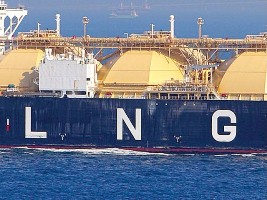
However, China’s liquefied natural gas (LNG) imports from Australia accounted for the largest share of its LNG imports in the third quarter at 36%. Imports from Australia increased 44% year-on-year to a record high of 1.7-million tonnes in the quarter under review, with its value increasing by 103% to $485-million.
Most commodity prices continued to decline in the third quarter, driven largely by an ongoing increase in supply. The CRQ noted that, while China’s demand for most imported raw materials has remained robust, Australia’s overall export earnings from trade with China had declined owing to sharp falls in the price of most commodities.
The report warned that, as the period of low commodity prices extended, more pressure would be placed on mines, in Australia, China and elsewhere, that were operating in the upper quartile of their respective industry cost curves.



