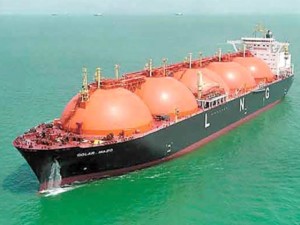
CANBERRA: By 2020 Australia is forecast to be the world’s biggest exporter of liquefied natural gas following a $200bn, decade-long investment boom. But the achievement risks being overshadowed by the unexpected announcement last week of new export controls by the Australian government to tackle a gas shortage, which it says is pushing up domestic prices and poses a threat to the country’s energy security. While the gas industry describes the new controls as “alarming”, they are unlikely to affect a significant percentage of global LNG sales, in a market that is forecast to be heavily oversupplied for the next few years. A greater market significance from export controls — with details remaining scant at this juncture — lies in Australia joining a list of countries in 2017 that have moved to restrict the free movement of natural resources, from metals to energy. This year Indonesia banned exports of unprocessed copper ore in a mining licence dispute with Freeport-McMoRan, the world’s largest copper miner, while the Philippines has restricted open pit mining in the country and curbed nickel ore shipments. The US, under President Donald Trump, has considered import taxes that could raise the price of bringing in international crude oil shipments to the world’s top oil consumer.
Australia’s move comes as the country experiences an upsurge in populist politics. Malcolm Turnbull, prime minister, has made energy prices a priority issue, amid a slump in popular support for his government that relies on a narrow one-seat majority in parliament. “This is a very political move in Australia,” says Neil Beveridge at Sanford C Bernstein. “It’s a function of very disjointed energy policy.” Analysts believe that over the next two to three years the impact will be limited to Australian suppliers having to buy just one or two additional cargoes to make up for any shortfall at times of peak demand. Prices in Asia-Pacific remain close to an eight-month low of $5.30 per million British thermal units, well below their peak above $20/mbtu just four years ago. Saul Kavonic at consultancy Wood Mackenzie says the maximum amount that would be affected was half the output of one of Australia’s six LNG chains which, when at full capacity, can pump out more than twice as much as the country’s daily gas demand.


By 2020, when the global LNG market is forecast to reach about 400m metric tonnes annually, the curbs are likely to affect less than 2 per cent of worldwide supplies and then only if Australia has not found ways to raise domestic production. But these scenarios are now subject to a greater degree of political risk. “Over the next few years we don’t think the impact on supplies is going to be huge,” Mr Kavonic adds. “But what the government has done has created a degree of uncertainty.” The shortage of gas on Australia’s east coast has been caused by a combination of factors, which include technology challenges and policy dysfunction in a country that is deeply divided over climate policy.