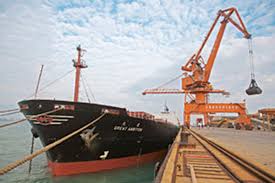
WASHINGTON: Chinese ports, which once thrived on coolie labor to lade and unload cargo, are increasingly turning to mechanization that will create modern ports with small workforces and fully computerized operations. Automated ports can operate around the clock, handling cargoes according to strict schedules. It gives ports a competitive advantage in a world where container shipping has slowed. Shanghai, the world’s largest container port, is at the vanguard of change. Shanghai International Port Group, China’s largest port company, released a video last week promoting its upcoming automated operations at the Yangshan Deep-Water Port in the southeast of the city.
China has been a bit of a latecomer in mechanized ports, but it is catching up rapidly. The new control systems operate 30 percent faster and more efficiently than conventional ports and reduce the workforce by up to 70 percent. As labor costs in China rise, that’s an important factor in cost competitiveness. The changes will add 6.3 million TEUs a year to the Shanghai port system, enabling it to reach 40 million TEUs a year. TEU stands for twenty-foot equivalent units, and one standard container equals one TEU.
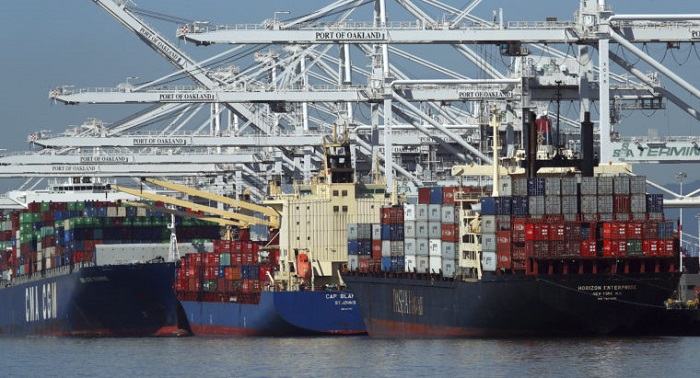

The goal, once reached, will mean that Shanghai is handling cargo equivalent to the annual tonnage at all ports across the US and 10 percent of global cargo a year. “Ports all over the world are upgrading,” said Wang Chen, an engineer at Shanghai Zhenhua Heavy Industries Co, an equipment and systems provider at Yangshan and also the world’s biggest crane producer. “It’s getting more difficult to recruit and retain port workers.”
Two years ago, Shanghai International Port announced plans to link up with Zhenhua to automate cargo handling. The company is in hot demand up and down the eastern coast of China to help modernize ports, including cargo operations in Xiamen, Qingdao and Tangshan. “Port managers tell me that young people in China nowadays don’t want to do the repetitive, tough work at ports,” Wang said. Yan Yunfu, executive director at Zhenhua, said crane operators in particular work under hard, stressful conditions that can lead to serious back problems. It takes at least half a year to train such operators and many just stay a year or two, making good money before they move on for health reasons.
According to job-hunting websites in China, a novice quay crane driver in Tianjin two years ago could earn 6,000 yuan (US$871) a month, while today it’s hard to find applicants for the same position in Guangzhou at less than 10,000 yuan per month. That’s where automation becomes a godsend. At Singapore’s Pasir Panjang, Terminal 5, crane operators sit in air-conditioned control rooms where they remotely guide cranes on the quay.
By maneuvering joysticks and pressing buttons, the operators can look at screens that give them real time pictures of moving containers. Siemens, the German-based industrial giant, has helped make work at the Singapore port even easier by freeing up the truck drivers who normally convey containers to storage areas after unloading. The vehicles and gantry cranes run automatically, handling 30 containers an hour, according to Christian Kogl, senior vice president of Siemens’ crane business. The process eliminates human error and safety risks, with a record of 20,000 hours of operations without any breakdowns or injuries.
Last year, PSA Singapore terminals handled 30.62 million TEUs, ranking just behind the 36.5 million TEUs in Shanghai. Singapore remains the world’s biggest trans-shipment hub, while Shanghai leads on throughput. Next year, fully automated operations will begin at Yangshan. Zhenhua, with 80 percent of the global market, said it relishes the challenge of arming Chinese ports with advanced digital software that links all the equipment into one integrated control system. “Although Siemens has excellent electric components and reliable systems, we have developed top-tier industrial know-how,” Yan said. Ports in progress will be essentially unmanned in the future. “We will trim down time significantly,” Yan said. “We are making decisions for the future that will have long-term positive effects.”