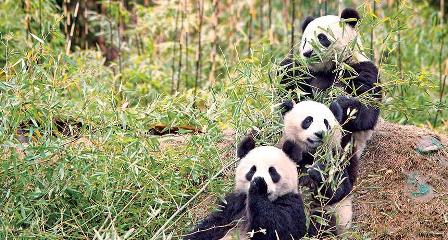


CANADA: A giant panda may look like a vegetarian on the outside, but it definitely looks like a carnivore on the inside.
A genetic analysis of 121 samples of panda poop finds that the community of microbes living inside these animals’ guts is optimized to digest meat. This is despite the fact that giant pandas have been eating bamboo for at least 7 million years, and that the plant has been the bears’ sole food source for at least 2 million years.
The findings, published Tuesday in the journal mBio, may not bode well for the endangered species. Only about 1,600 giant pandas remain in the forests of northern and central China.
“The peculiar characteristics of its gut microbiota may put it at high risk of extinction,” the study authors wrote.
Scientists have come to appreciate that the microbes in our guts play an essential role in keeping us healthy. These bacteria help their hosts digest the foods they eat and extract — or synthesize — the needed nutrients.
In theory, the microbes in the panda gut should be pretty busy. Pandas eat as much as 28 pounds of bamboo each day, a diet that requires as much as 14 hours of munching. Once the plant material reaches the panda intestine, digestive enzymes should get busy digesting all that fiber.

Karachi Port sets 138-year cargo handling record
KARACHI: Pakistan's maritime sector has achieved a major milestone as Karachi Port set a new record in its 138-year history...