DHAKA: Bangladesh needs a deep sea port. The country has one of world’s fastest growing economies, which is expected to rise at a 7.1 percent clip this year. It is on Goldman Sachs’s list of the “Next 11” emerging economic powerhouses of the 21st century. On the strength of the second-most dynamic textile industry on the planet, Bangladesh’s export sector is booming, and is expected to eclipse $50 billion per year in value by 2021. This is all in a country without adequate maritime infrastructure.
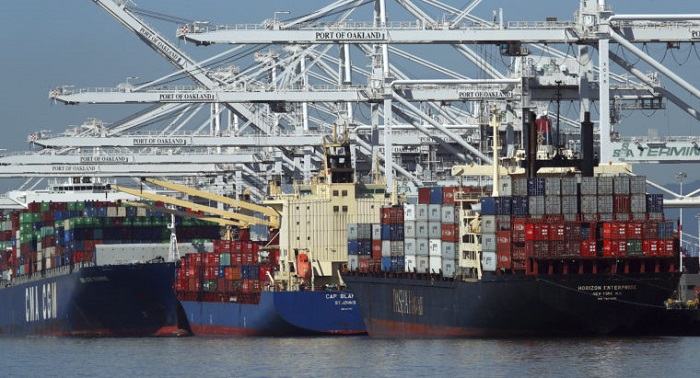
In its 45-year history as an independent state, Bangladesh has never built a new port. While $60 billion of annual trade currently pours through the country’s two existing seaports, Chittagong and Mongla, both are too shallow for large container ships and require costly load transfers to smaller vessels to get cargo in and out — an added step that can cost an additional $15,000 per day and severely decreases the ports’ global competitiveness.

However, finding solutions to this problem has proven problematic for Bangladesh. But this isn’t because of a lack of options, a deficit of investors, or even a dearth of international support, but exactly the opposite: too many powerful players are pushing for too many contending plans.
This has left Bangladesh geopolitically stalemated, making and breaking deals, going with one project and then changing position and going with another. Ultimately, this plethora of options has pitted China, Japan, and India in direct competition with each other to build Bangladesh’s first deep sea port.
Although a small country, Bangladesh is of clutch geopolitical importance, being located in the armpit of India and right on the Indian Ocean. The Indian Ocean region contains 25 percent of the world’s land, 40 percent of its oil and gas reserves, and a third of the global population. It hosts one of the world’s busiest and most important shipping lanes, which supplies East Asia with the bulk of its Middle Eastern crude oil.
Dhaka is still politically and economically pliable–like a ball of clay–and has become one of the preeminent global staging grounds of interests from east and west, which are trying to mold the country to be what they want it to be and not get pushed out of the game. Bangladesh is a keystone nation in the region, balancing together the contending influences of India, China, the United States, and Japan.
The Belt and Road initiative is the formalization of China’s strategy for securing and bolstering their commercial trade routes, and Bangladesh is a major part of its maritime agenda. China has been establishing a network of ports, dubbed the 21st Century Maritime Silk Road, extending from their own coastlines through Southeast Asia, the Indian Ocean, the east coast of Africa, and up through the Mediterranean to Greece.
Although designed as a commercial project, this endeavor has instilled a sense of trepidation in the other actors in the South Asian theater, who perceive it as potentially having militaristic ramifications — or at least leveraging this reasoning to push their own competing agendas. This trepidation was brought up by consulting firm Booz Allen Hamilton in a 2005 internal report prepared for the U.S. Department of Defense, which first dubbed this plan the “String of Pearls” — a label that has been used ever since to denigrate China’s ambitions in the watery parts of South Asia.
This geopolitical competition has risen to an apex when it comes to selecting the site and the financier of Bangladesh’s first deep sea port, with some powers making great financial and political strides to secure their own interests and to keep those of others at bay. There are currently at least four potential locations for the impending new port: Chittagong, Sonadia, Matarbari, and Payra.