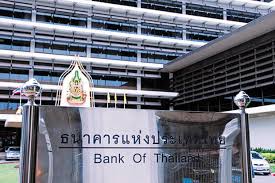
BANGKOK: The Bank of Thailand is confident on the country’s outlook for economic growth, despite the concerns over a strong baht that prompted a call by the Finance Ministry for a cut in interest rates.
The Finance Ministry this week urged the cut in rates in order to ease upward pressure on the baht. But Bank of Thailand governor Veerathai Santiprabhob said a reduction in interest rates would not deter the capital inflows that have been pushing up the currency. Veerathai said investors had shown confidence in the recovery of the economy and thus an interest rate cut would be unlikely to slow the pace of baht appreciation. He said the spread between Thai interest rates and those in other countries may not deter capital inflows as investors are also motivated by other factors in addition to yield, noting that shorter-term bond yields are lower than the policy rate of 1.5 per cent. He said the central bank had been closely watching exchange rate movements and is ready to intervene in the market when the baht rises too strongly in the short term, as this would affect consumption and the whole economy.


However, the central bank cannot fight the trend and exporters have to learn how to hedge against exchange rate volatility. “The problem is US dollar weakness. It has depreciated by 10 per cent while the baht moved up by 7-8 per cent from early this year,” Veerathai said. “This suggests other currencies have appreciated more than the baht.” Veerathai was confident that the baht would move in line with other regional currencies and thus result in the country not being at an export disadvantage with competitors. He said that while the inflation rate is lower than targeted, the country was not experiencing deflation as the economy is still growing. Separately, the United Nations Conference on Trade and Development (Unctad) – worried about the sustainability of the global recovery – has called for an end to austerity and for more spending to boost demand like the New Deal after World War II. “The world economy is picking up but not lifting off,” Unctad economist Padma Gehl Sampath said yesterday during the presentation of Unctad‘s “Trade & Development Report 2017” at a press conference called by Unctad and the International Institute for Trade and Development in Bangkok She said the question is where demand will come from in the next few years. Demand in India and China is robust but now China is facing challenges in balancing its economy. Lower interest rates in the eurozone are insufficient, as many still can’t find jobs, she said.
Thailand also has many challenges, as its economy has been weakened after the 1997 financial crisis. Austerity is not the solution for Thailand. The government has run fiscal deficits but revenue also decreased, so the government needs to think about getting more revenue. “Stop corporate tax subsidies but tax companies, particularly large firms,” Sampath said, referring to a balance between the benefits of foreign direct investment and the local economy. “FDI is good for the country but the government offers multinationals companies a tax holiday of eight to 10 years. That’s too long.” Thailand also needs to strengthen its anti-trust law to minimise market monopolies by large firms. Thailand is drafting a new anti-trust law. Thailand has to diversify exports by increasing technological content. So far Thailand’s automobile industry is driven by semiskilled labour does better, she added. Unctad forecasts global gross domestic product to expand 2.6 per cent this year, up from 2.2 per cent last year.