You might also like


HONG KONG: A honeybee parasite called the varroa mite, which can hide in plain sight amid bee colonies by manufacturing bee-like smells.
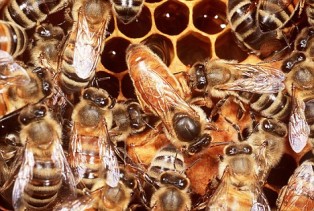
Scientists already knew that these mites were masters of mimicry: Earlier research showed that the aptly named Varroa destructor can not only mimic bees’ identifying scents, but match them as their hosts grow up. A study published yesterday in Biology Letters revealed that the vassoa mite can also adapt if it’s moved from one bee species to another. The research team, a US-Chinese-French collaboration, took mites living on European honeybees and transplanted them to Asian honeybees, and vice versa, and found that in both cases the mites changed the combination of chemicals they emit to appear more similar to their hosts.
Smell is an important trait for insects, especially bees. It’s one of the ways they keep track of who’s meant to be in the hive and who’s not. Bees can smell an intruder, and in order to protect the hive, will kill an outsider within five minutes.