
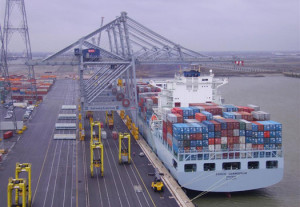
BRUSSELS: A delegation of Iranian petrochemical experts explored grounds for cooperation on the export of Iranian petrochemicals in a meeting with the head of Antwerp Port in Belgium.
In the meeting attended by Frank Geerkens and Marzieh Shahdaei, the head of National Petrochemical Company, the two sides discussed expanding bilateral collaboration in health, safety and environment (HSE) training as well as using the port as a gateway for supplying Iran’s petrochemical products to Europe, IRNA reported on Friday.


“We are ready to provide NPC’s staff with advanced HSE and firefighting training courses,” Geerkens said, noting that Belgium’s Port of Antwerp can help Iran expand its foothold in the global petrochemical market. Pointing to his interest in touring Pars Special Economic Energy Zone and Mahshahr Port in southern Iran, Geerkens looked forward to visiting Iran in the near future.
Antwerp is a port in the heart of Europe accessible to a large number of vessels. The port has become one of Europe’s largest seaports, ranking second behind Rotterdam by total freight shipped. Its international rankings vary from 11th to 20th.
Reportedly, the Iranian delegation headed by Shahdaei was given an extensive tour of the port to scrutinize its capacities.
“In the fiscal 2016-17, Iran produced 50.61 million tons of petrochemicals, of which 20.3 million tons were exported,” she added, noting that the lion’s share of petrochemical consignments went to Asia, Europe and South America. Based on reports, Iran holds 38% of the Middle East petrochemical market, but only produces 4.8% of the world’s petrochemicals despite sitting on some of the world’s largest crude oil and natural gas reserves.
According to Ali Mohammad Bosaqzadeh, NPC’s coordination and supervision director, Tehran and some foreign firms are in the final phase of negotiations to conclude petrochemical contracts either to expand complexes or to build new units in the near future.
“Our talks with multinationals have come to fruition and the previously signed memorandums of understanding will be finalized in the form of long-term deals sooner or later,” Bosaqzadeh said.
“European firms as well as Asian enterprises have already expressed their willingness to play an active role in developing Iran’s lucrative petrochemical market.”
The official noted that should the contracts be finalized, Iran’s petrochemical industry will gear up for a leap as it will not be deprived of cutting-edge technical know-how anymore.
“The prominent aspect of collaboration with international majors in the petrochemical sector is the transfer of state-of-the-art technology to complete the value-added chain,” he said. Referring to ongoing talks with the French energy major Total, Bosaqzadeh said preliminary agreements have been reached on the development of two plants to produce a special grade of polyethylene, each with an annual production capacity of 500,000 tons.
“Huge resources of gas, a mix of petrochemical feedstock with reasonable prices, accessibility to international waters via the Persian Gulf and Sea of Oman as well as proximity to large consumer markets such as India and China among other East Asian countries, Turkey and Caucasian states, are some of the factors that can put Iran’s petrochemical sector in a more favorable position to attract foreign investment,” he said.



