
Customs Today
  • Home
  • Islamabad
  • Karachi
  • Lahore
  • National
  • Transfers and Postings
  • Chambers & Associations
  • Business
No Result
View All Result
Customs Today
  • Home
  • Islamabad
  • Karachi
  • Lahore
  • National
  • Transfers and Postings
  • Chambers & Associations
  • Business
No Result
View All Result
Customs Today
No Result
View All Result
Home Science & Technology Science

Best friends for 30,000 years: Dog can read human’s emotions

byCustoms Today Report
14/02/2015
in Science, Science & Technology
Share on FacebookShare on Twitter

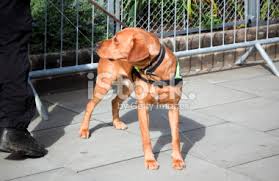
PARIS: Dogs have been man’s best friend for 30,000 years and scientists have now discovered the secret to that long companionship – they can read our emotions.

The researchers discovered dogs were able to tell simply from looking at a human facial expression whether that person was happy or angry.


You might also like

Tesla driverless system to use updated radar technology

12/09/2016

Apple to develop its own self-driving technology

10/09/2016

The discovery represents the first solid evidence that an animal other than humans can discriminate between emotional expressions in another species.

Professor Ludwig Huber of the University of Veterinary Medicine Vienna said: “Our study demonstrates that dogs can distinguish angry and happy expressions in humans, they can tell that these two expressions have different meanings, and they can do this not only for people they know well, but even for faces they have never seen before.”

For the study, published in the Cell Press journal Current Biology, the researchers trained dogs to discriminate between images of the same person making either a happy or an angry face.

In every case, the dogs were shown only the upper or the lower half of the face.

After training on 15 picture pairs, the dogs were tested in four types of trials that involved looking at new faces or different parts of the faces they had already seen.

The dogs were able to select the angry or happy face more often than would be expected by random chance in every case, the study found.

The findings show that not only could the dogs learn to identify facial expressions, but they were also able to transfer what they learned in training to new cues.

Dr Corsin Müller added: “We think the dogs in our study could have solved the task only by applying their knowledge of emotional expressions in humans to the unfamiliar pictures we presented to them.”

Professor Huber said it was hard to say what seeing a happy or an angry face meant for individual dogs, “but it appears likely to us that the dogs associate a smiling face with a positive meaning and an angry facial expression with a negative meaning” he added.


Related Stories

Tesla driverless system to use updated radar technology

byCT Report
12/09/2016

WASHINGTON: Electric carmaker Tesla announced Sunday it was upgrading its Autopilot software to use more advanced radar technology. In a...

Apple to develop its own self-driving technology

byCT Report
10/09/2016

SAN FRANCISCO: Apple may not become an automaker, but it still wants to develop its own self-driving technology. The iPhone-maker's...

NASA spots slowest known magnetar

byCT Report
10/09/2016

WASHINGTON: Astronomers have found evidence of a magnetar - magnetised neutron star - that spins much slower than the slowest...

‘YouTubers’ outshining old-school television

byCT Report
09/08/2016

SAN FRANCISCO: A media revolution is taking place, and most people over 35 years of age aren’t tuned in. Millennial...

Next Post

Oppo launches Rs 16,990 Mirror 3 in India, 3G dual-SIM smartphone, 8 GB storage, 8 MP camera

  • Terms and Conditions
  • Disclaimer

© 2011 Customs Today -World's first newspaper on customs. Customs Today.

No Result
View All Result
  • Transfers and Postings
  • Latest News
  • Karachi
  • Islamabad
  • Lahore
  • National
  • Chambers & Associations
  • Business
  • About Us

© 2011 Customs Today -World's first newspaper on customs. Customs Today.