Customs Today
  • Home
  • Islamabad
  • Karachi
  • Lahore
  • National
  • Transfers and Postings
  • Chambers & Associations
  • Business
No Result
View All Result
Customs Today
  • Home
  • Islamabad
  • Karachi
  • Lahore
  • National
  • Transfers and Postings
  • Chambers & Associations
  • Business
No Result
View All Result
Customs Today
No Result
View All Result
Home Science & Technology Science

Billions of stars in Milky Way may have 1-3 planets in habitable “Goldilocks” zone

byCT Report
19/03/2015
in Science
Share on FacebookShare on Twitter

NEW YORK: Researchers at the Neils Bohr Institute at the University of Copenhagen and the Australian National University undertook a study of the thousands of exoplanets discovered by the Kepler satellite. Examining these planetary systems, they calculated the probability for the number of stars that might have planets in the habitable “Goldilocks” zone. The results of the new study suggest that billions of stars in the Milky Way will have one to three planets in the habitable zone where where water and life could possibly exist.

The results of the study were published in the most recent edition of the Monthly Notices of the Royal Astronomical Society.
You might also like

Astronomers discover distant dwarf planet beyond Neptune

12/07/2016

Nasa’s Juno successfully begins orbit of Jupiter

05/07/2016

The calculations regarding the possible number of habitable planets are based on a method called the Titius-Bode law. This law, which was developed in the 1770s, predicts the distance and orbits of planets in a solar system. The researchers applied the T-B law to the 1,000 exoplanets (and 3,000 possible exoplanets) discovered by NASA’s Kepler satellite ovedr the last few years. They examined 151 planetary systems (systems where Kepler had detected between three and six planets), and determined that the Titius-Bode law accurately described the 124 of the systems.

The researchers then evaluated the number of planets in the Goldilocks zone based on the extra planets that were added to the 151 planetary systems based on the Titius-Bode law. The final calculation determined there should be 1-3 planets in the habitable zone of each planetary system.

“We then made a priority list with 77 planets in 40 planetary systems to focus on because they have a high probability of making a transit, so you can see them with Kepler. We have encouraged other researchers to look for these. If they are found, it is an indication that the theory stands up,” noted Steffen Kjær Jacobsen, a researcher from the University of Copenhagen involved in the project.


Related Stories

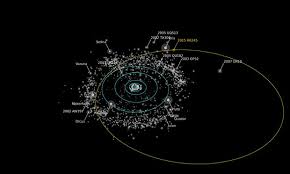
Astronomers discover distant dwarf planet beyond Neptune

byCT Report
12/07/2016

LONDON: A dwarf planet half the size of Britain has been found tumbling through space in the most distant reaches...

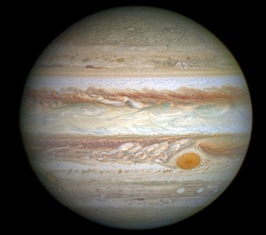
Nasa’s Juno successfully begins orbit of Jupiter

byCT Report
05/07/2016

MIAMI: Nasa's unmanned Juno spacecraft has begun orbiting Jupiter, a key triumph for a $1.1 billion mission that aims to...

Coal dust kills 23,000 per year in European countries

byCT Report
05/07/2016

PARIS: Lung-penetrating dust from coal-fired power plants in the European Union claims some 23,000 lives a year and racks up...

Helium shortage could be solved by new life-saving discovery

byCT Report
28/06/2016

LONDON: Scientists might finally have overcome a global shortage of helium – potentially saving millions of lives in the process....

Next Post

Additional Director-IR relinquishes, Second Secretary assumes charge

  • Terms and Conditions
  • Disclaimer

© 2011 Customs Today -World's first newspaper on customs. Customs Today.

No Result
View All Result
  • Transfers and Postings
  • Latest News
  • Karachi
  • Islamabad
  • Lahore
  • National
  • Chambers & Associations
  • Business
  • About Us

© 2011 Customs Today -World's first newspaper on customs. Customs Today.