You might also like


MEXICO: Researchers have suggested through a new study that globular clusters – spherical collections of up to a million densely packed stars found in galactic haloes – could be factories of binary black holes.
Binary black holes are two black holes in close orbit around each other. The researchers have also suggested that new observatories which are scheduled to go operational as soon as this year could potentially detect 100 merging binary black holes per year forged in the cores of these dense star clusters.
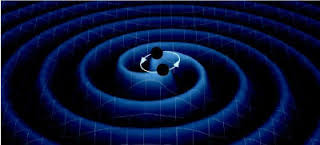
Researchers have long sought evidence of coalescence of two black holes, but because these violent events do not emit any light, they are elusive and observing them has been impossible so far. However, there is at least one way of detecting such merging – through the release a phenomenal amount of energy as gravitational waves.
The first observatories capable of directly detecting these ‘gravity signals’ — ripples in the fabric of spacetime first predicted by Albert Einstein 100 years ago — will begin observing the universe later this year.
When the gravitational waves rolling in from space are detected on Earth for the first time, a team of Northwestern University astrophysicists predicts astronomers will “hear,” through these waves, five times more colliding black holes than previously expected. Direct observations of these mergers will open a new window into the universe.