Customs Today
  • Home
  • Islamabad
  • Karachi
  • Lahore
  • National
  • Transfers and Postings
  • Chambers & Associations
  • Business
No Result
View All Result
Customs Today
  • Home
  • Islamabad
  • Karachi
  • Lahore
  • National
  • Transfers and Postings
  • Chambers & Associations
  • Business
No Result
View All Result
Customs Today
No Result
View All Result
Home Science & Technology Science

Birds moving towards poles, higher grounds due to warming habitats

bySana Anwar
30/11/2015
in Science, Science & Technology
Share on FacebookShare on Twitter

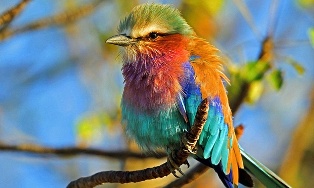
CANADA: A new report discovered that birds have started to flock toward the north and south poles of Earth – up on higher ground as they bear the brunt of climate change.

A new report from Birdlife International stated that a quarter of 570 bird species studied around the world has been adversely affected by climate change. A mere 13 percent, according to the study, responded positively.


You might also like

Tesla driverless system to use updated radar technology

12/09/2016

Apple to develop its own self-driving technology

10/09/2016

In the report entitled “The Messengers,” co-author Tris Allinson said that while people believe climate change is yet to happen, birds’ actions are a telling sign of the significant changes already taking place.

“[There were] detrimental effects for a large proportion of the birds studied,” said Allinson, adding that they are seeing a consistent movement of birds toward the north and south poles in their hemispheres, and to higher altitudes on mountain slopes.

For instance, Keel-billed toucans as well as other traditional lowland bird species are now situated at up to 1,500-meter elevations in Costa Rica due to climate change. In Europe, “warm-adapted” species are rising in numbers while “cool-adapted” ones are suffering from sharp declines.

Much-adored creatures are crashing in numbers, including the Atlantic puffin and Adelie penguins whose populations were slashed in half in a mere number of generations.

Birds’ behaviors and migratory timing are also changing and having an impact on their interactions with other species, warned Allinson.

For instance, cuckoos that usually time their yearly returns from Africa to utilize local birds’ nests are arriving later than the period for local bird breeding as temperatures increase. Their numbers are also facing decline in different countries.


Related Stories

Tesla driverless system to use updated radar technology

byCT Report
12/09/2016

WASHINGTON: Electric carmaker Tesla announced Sunday it was upgrading its Autopilot software to use more advanced radar technology. In a...

Apple to develop its own self-driving technology

byCT Report
10/09/2016

SAN FRANCISCO: Apple may not become an automaker, but it still wants to develop its own self-driving technology. The iPhone-maker's...

NASA spots slowest known magnetar

byCT Report
10/09/2016

WASHINGTON: Astronomers have found evidence of a magnetar - magnetised neutron star - that spins much slower than the slowest...

‘YouTubers’ outshining old-school television

byCT Report
09/08/2016

SAN FRANCISCO: A media revolution is taking place, and most people over 35 years of age aren’t tuned in. Millennial...

Next Post

Taiwan stocks extand its loss at open, TAIEX sheds 1.3pc

  • Terms and Conditions
  • Disclaimer

© 2011 Customs Today -World's first newspaper on customs. Customs Today.

No Result
View All Result
  • Transfers and Postings
  • Latest News
  • Karachi
  • Islamabad
  • Lahore
  • National
  • Chambers & Associations
  • Business
  • About Us

© 2011 Customs Today -World's first newspaper on customs. Customs Today.