Customs Today
  • Home
  • Islamabad
  • Karachi
  • Lahore
  • National
  • Transfers and Postings
  • Chambers & Associations
  • Business
No Result
View All Result
Customs Today
  • Home
  • Islamabad
  • Karachi
  • Lahore
  • National
  • Transfers and Postings
  • Chambers & Associations
  • Business
No Result
View All Result
Customs Today
No Result
View All Result
Home Science & Technology Science

Black hole more powerful than a trillion suns

byCustoms Today Report
20/02/2015
in Science, Science & Technology
Share on FacebookShare on Twitter

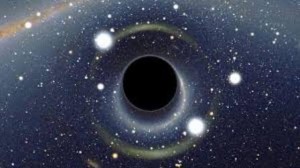
MEXICO: In the middle of a galaxy more than 2 billion light years from Earth, a black hole called PDS-456 spews radiation and ultra-fast winds. The gusts carry more energy per second than a trillion suns and blow outward in all directions at intensities high enough to stop stars from forming, pitting the galaxy in a huge, cosmic struggle with the mysterious force at its center.

It may sound like something from science fiction, but the phenomenon has been quantified for the first time by researchers at NASA and the European Space Agency.


You might also like

Tesla driverless system to use updated radar technology

12/09/2016

Apple to develop its own self-driving technology

10/09/2016

In a study published in the journal Science on Friday, astronomers say they have calculated the speed, shape and size of the winds surrounding black holes, allowing them to figure out how these forces impact their galaxies.

Contrary to popular depictions, black holes aren’t dark vortices of empty space. Rather, they are extremely dense collections of matter formed when stars collapse on themselves. Their gravitational pull is so strong that nothing, not even light, can escape.

Astronomers have long understood that black holes have an impact on the galaxies that surround them. Looking at galaxies is the only way they can even study the phenomena, since black holes can’t be directly observed. Past research shows that galaxies with large black holes will have a similarly large “bulge” at their center.

But this new study demonstrates that the high-speed winds surrounding black holes, called quasar winds, also affect their galaxies. The winds intensify in proportion with the black hole’s growth, pushing gas outward.

“Now we know quasar winds significantly contribute to mass loss in a galaxy, driving out its supply of gas, which is fuel for star formation,” lead author Emanuele Nardini said in a NASA press release.

Scientists think that a black hole and its galaxy are engaged in a kind of astronomical balancing act — as a galaxy expands, the black hole at its center works to impede the growth and prevent new stars from developing.


Related Stories

Tesla driverless system to use updated radar technology

byCT Report
12/09/2016

WASHINGTON: Electric carmaker Tesla announced Sunday it was upgrading its Autopilot software to use more advanced radar technology. In a...

Apple to develop its own self-driving technology

byCT Report
10/09/2016

SAN FRANCISCO: Apple may not become an automaker, but it still wants to develop its own self-driving technology. The iPhone-maker's...

NASA spots slowest known magnetar

byCT Report
10/09/2016

WASHINGTON: Astronomers have found evidence of a magnetar - magnetised neutron star - that spins much slower than the slowest...

‘YouTubers’ outshining old-school television

byCT Report
09/08/2016

SAN FRANCISCO: A media revolution is taking place, and most people over 35 years of age aren’t tuned in. Millennial...

Next Post

PTA says Warid Telecom has lowest number of customer complaints, 88% users satisfied with services

  • Terms and Conditions
  • Disclaimer

© 2011 Customs Today -World's first newspaper on customs. Customs Today.

No Result
View All Result
  • Transfers and Postings
  • Latest News
  • Karachi
  • Islamabad
  • Lahore
  • National
  • Chambers & Associations
  • Business
  • About Us

© 2011 Customs Today -World's first newspaper on customs. Customs Today.