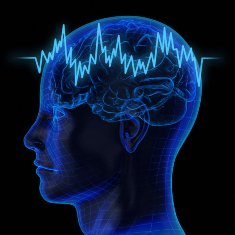


NEW YORK: Researchers at MIT have proven that the brain’s cortex doesn’t process specific tasks in highly specialized modules — showing that the cortex is, in fact, quite dynamic when sharing information.
Previous studies of the brain have depicted the cortex as a patchwork of function-specific regions. Parts of the visual cortex at the back of the brain, for instance, encode color and motion, while specific frontal and middle regions control more complex functions, such as decision-making. Neuroscientists have long criticized this view as too compartmentalized.
In a paper published in Science, the researchers from the Picower Institute for Learning and Memory at MIT show that, indeed, multiple cortical regions work together simultaneously to process sensorimotor information — sensory input coupled with related actions — despite their predetermined specialized roles.
“There’s an emerging view in neuroscience that cortical processing is a combination of a network of dynamic areas exchanging information — rather than a patchwork of modules — and that’s what we found,” says Earl Miller, the Picower Professor in MIT’s Department of Brain and Cognitive Sciences, and senior author of the paper.
The researchers used cutting-edge techniques to record neural activity simultaneously, for the first time, across six cortical regions during a task in which the color or motion of dots had to be identified. These regions, ranging from the front to back of the brain, were thought to each specialize in specific sensory or executive functions. Yet the researchers found significant encoding for all information across all regions — but at varying degrees of strength and timing.

Karachi Port sets 138-year cargo handling record
KARACHI: Pakistan's maritime sector has achieved a major milestone as Karachi Port set a new record in its 138-year history...