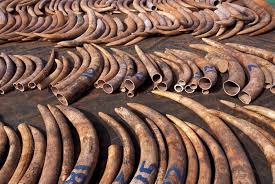
PARIS: Between 2011 and 2014, member states reported seizures of around 4500 ivory items reported as specimens and an additional 780 kg as reported by weight. Between 2003 and 2014, 92 per cent of EU exports of pre-convention tusks went to China or Hong Kong. The French ban goes far beyond the current EU wildlife trade regulations, and comes just weeks ahead of the next CITES meeting. The move was greeted by Humane Society International/Europe’s executive director Joanna Swabe. She said, “We warmly salute the French government for taking decisive action to halt the cruel trade in elephant ivory and rhino horn.
“The demand for these wildlife products has led to a poaching epidemic that has not only decimated elephant and rhino populations across Africa and Asia, but also helps to fund organised crime and terrorism.” Swabe went on, “We strongly applaud Royal’s commitment to stamping out poaching and wildlife trafficking and urge other EU member states to follow suit.”


However, another member state, the UK, has come under fire for failing to clampdown on the domestic ivory market. Jonathan Baillie, director of conservation programmes at the Zoological Society of London, said, “The UK’s domestic ivory market provides ample cover for illegal activity. As we plan for a future outside the EU, we must not turn away from our international responsibilities. “The UK government must make a clear announcement on closing the UK market, and call on others to do the same.”
The French action is seen as particularly important since the measures adopted go far beyond the current EU wildlife trade regulations that permit the trade in ivory procured before 1947. The French decree includes provisions to ban the trade and commercial use of raw ivory, plus the production of artefacts using ivory, irrespective of its age. It also prohibits both the restoration and sale of ivory products bought after July 1975, even if they were purchased legally.
The African Elephant Coalition, representing 70 per cent of the African elephant range states, has put forward a proposal to list all African elephant populations under what is known as Appendix I, thereby prohibiting all international commercial trade in ivory. The Coalition has also tabled additional proposals calling for closure of domestic ivory markets and restricting the trade in live elephants to in situ conservation programmes only. The European Commission has voiced opposition to the African Elephant Coalition’s elephant protection proposals. The EU has the largest voting block at the CITES Conference of Parties and, according to campaigners, “holds the key” to the success or the failure of elephant protection measures.
HSI/Europe has now urged the Commission and its member states to support the African Elephant Coalition’s proposals. The group says that all five rhino species are threatened with extinction. In 2015, more than 1300 rhinos were killed in South Africa alone, out of a remaining 28,000 left in the wild.
From 2010 to 2012, 100,000 elephants were killed for their ivory. In Central Africa, between 2002 and 2013, 65 per cent of forest elephants were killed.
According to the Great Elephant Census, poachers killed half of Mozambique’s elephants in five years, while Tanzania lost a catastrophic 60 per cent of its elephants during the same period.
The majority of ivory trafficking is destined for China or southeast Asia. However, once smuggled ivory leaves Africa, their trafficking routes could go through Europe or the Middle East to reach Asia. Germany, Switzerland and the United Arab Emirates are among the numerous airports that have seized or intercepted smuggled ivory from Africa to Asia.