
OTTAWA: The week started out with what should be a good news story – that the federal government ended 2014 with a small surplus of $1.9 billion.
That’s only a small drop in the face of Ottawa’s $280.4-billion budget, but our federal leaders raced to interpret it for us.
While the Conservative’s Stephen Harper called it good news and forecast another surplus for 2015, the NDP’s Tom Mulcair greeted it as a chance to show how some of his spending promises could be achieved without running a deficit.
Surplus during recession seems like bad economic planning: Don Pittis
Meanwhile, Liberal Leader Justin Trudeau, who is pledging more years of deficits, said there was a clear cost to that surplus.
“It was a political goal that actually has helped us slide into the recession that Canada is the only G7 country in right now,” he said.
Be happy about manufacturing sales
Talk of recession lingers after two straight quarters in which the economy shrank. And the OECD added fire to the argument that Canada is not doing well, by downgrading its forecast of Canadian growth in 2015 to 1.1 per cent.
But in the third quarter of the year, preliminary figures show a big rise in manufacturing sales, which could mean Canada is in recovery.
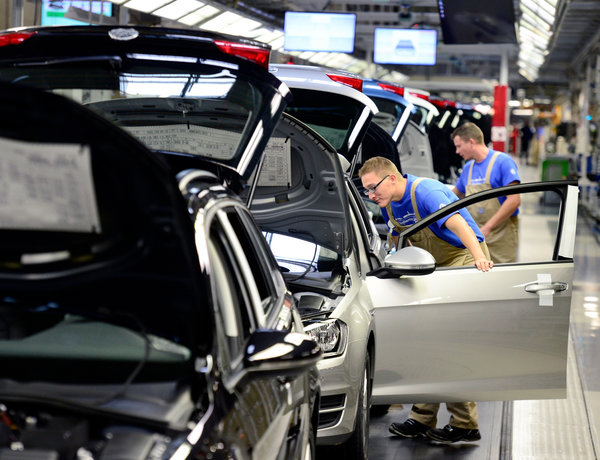
Manufacturing sales rose 1.7 per cent to $52.2 billion in July, led by a 5.6 per cent gain in the auto sector.
That comes on top of a gain in May of 0.7 per cent and June of 1.5 per cent, with both numbers revised upward.
The falling loonie has benefited the auto sector, as it makes manufacturing in Canada more competitive.
But Canada’s auto parts makers are fighting a battle to hold onto their share on another front.
Auto parts and TPP
The Trans-Pacific Partnership trade deal threatens to reduce the amount of North American-made content in auto parts and in cars generally.
Canada can compete on some fronts, but on others, it’ll be a fight, according to Flavio Volpe, president of the Automotive Parts Manufacturers Association.
“Canadian companies will always compete on higher added-value and innovation. That’s the stuff that keeps us in the game,” he said.
The fear is that parts made in China, Thailand and other low manufacturing cost jurisdictions will be allowed in Japanese and Korean products that will move into North America tariff-free.
“But a lot of those components are raw materials. A lot of those components are very low added value. And the countries that have different cost for raw materials and different treatment of labour and employment standards and environment have a different advantage,” he said.
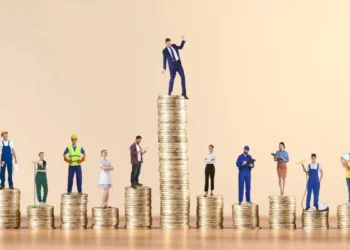
Pakistan faces challenges to expand public services as Oxfam warns of rising inequality in Asia
ISLAMABAD: Pakistan faces growing challenges in ensuring access to healthcare, education, and social protection as governments across Asia continue to...