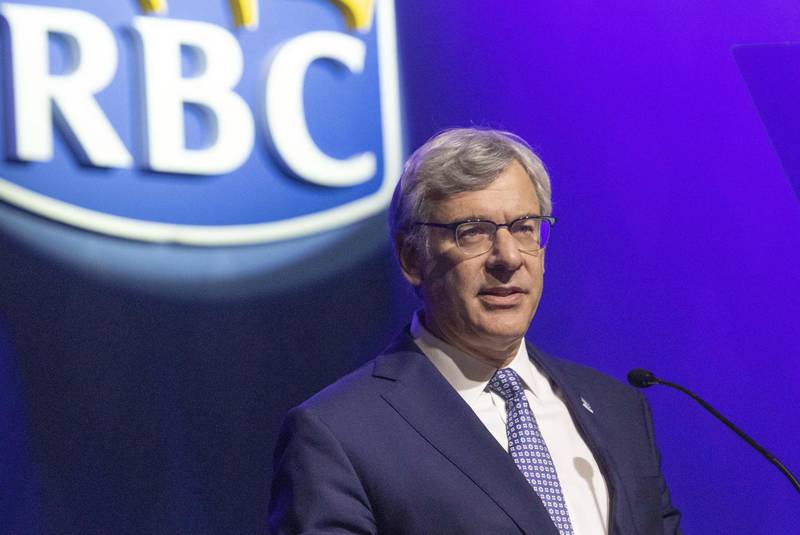
Canadians need to be honest with themselves about economic growth and global competitiveness, Royal Bank of Canada CEO Dave MacKay said Thursday.
“When I travel overseas, I often hear concerns from investors about Canada’s falling position in the world. And the numbers back up that sentiment,” MacKay said in a speech at the bank’s 150th annual general meeting in Halifax, where it was founded.


“Our exports of non-energy goods have been stagnant for a decade. Our resources sector is coping with a growing crisis. And over the last 20 years, our productivity growth has dropped by nearly half,” he said.
Canada has lost some of its momentum, its competitiveness is challenged and its capacity to grow and advance its economy is stalling, MacKay told shareholders gathered at the Halifax Convention Centre.
Canada needs a new approach, he said, and he continued to outline four major steps the country can take to improve “competitiveness and reinvigorate ‘Brand Canada’ for the future.”
Canada must first build a smart infrastructure — both digital and physical — that enables this country to get its goods and services to a global marketplace.
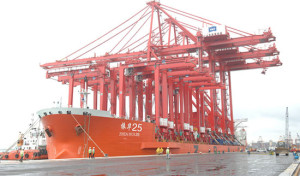
“Ports are critical to Canada’s global success. That’s something all Canadians can get behind,” he said. “The same should be true for (oil) pipelines.”
“Investment in energy is critical to ensuring Canada remains prosperous for now, and generations to come. We must balance the need to reduce our carbon footprint, with the need to produce more energy to supply growing demand globally,” said MacKay.
“We’re putting our standard of living at risk if we don’t strike this balance.”
Secondly, he said, the knowledge economy thrives on brands and intellectual property — assets that are the new assembly lines of economic production. Canada’s ability to bring to market and scale products, services, and ideas will be critical to accelerating the economy in the future.
“Canada needs more ambitious thinking that stretches beyond our borders — like the type you find at Nova Scotia’s own Acadian Seaplants, a global leader in seaweed and the largest independent marine plant processing company in North America,” MacKay said.
Acadian has created its own industry, exporting seaweed-based food, agriculture and chemical products to more than 80 countries. It has continuously pushed beyond Canada’s borders and set big strategic goals, he said.
MacKay’s third step is to build a powerhouse of data innovation, which he said is unquestionably the most important element of the knowledge economy.
“We need a national data policy that both encourages innovation and ensures privacy protection,” said MacKay.
“In the data economy, we need a Team Canada approach,” he said, pointing out that when it comes to research and development, Canada is currently ranked only 15th in the OECD for university-industry collaboration.
The fourth step toward improving Canada’s competitive position in the world, MacKay said, is to create a “future-focused skills development model.”
“Canada has one of the highest education rates in the world, with more than 60 per cent of our young people going to college or university. Yet, despite this supply, Canadian tech firms say they have an insufficient pool of talent.”
Canada ranks well outside the top 10 in the OECD for PhDs in science, technology, engineering and mathematics, and for business graduates, he said.
“We’re educating young Canadians, but not always for the jobs of tomorrow,” said MacKay.
To change that, he said the Royal Bank has promoted the idea of work-integrated learning called the Business/Higher Education Roundtable.
That group, said MacKay, has set out to create 150,000 meaningful work placements per year to ensure every college and university student has access to these experiences during their education journey.