LONDON: The UK is facing an “absolute catastrophe” if it does not sort out a “frictionless and seamless” border at Dover and other ports, the shipping industry has warned.
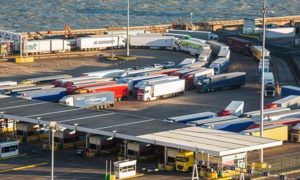
The UK Chamber of Shipping, which represents 170 freight ships, tankers and cruise liners, has called on governments across Europe to urgently grasp the challenge, arguing that a problem for the UK will also be a problem for ports in Holland, Belgium, France and Ireland. “I think the UK government gets it, but I am not so sure other countries do,” said Guy Platten, the chief executive officer. “It is a massive problem that we need to get solved. It is in the political gift to have a frictionless or not have a frictionless border. It is a human construct,” he said. At a media briefing on Wednesday, the chamber said the issue was not the prospect of tariffs being introduced if the UK quits the European customs union as these could be processed electronically. It was, rather, the question of customs checks on either side of the borders between the UK and the continent, and the UK and Ireland. He said Dublin would probably grind to a halt if customs checks were introduced at Dublin Port or Holyhead in north Wales, which handles 400,000 trucks every year delivering food and other goods to shops and suppliers in the UK and the continent. The freight and haulage industry and Eurotunnel warned earlier this year that a port such as Dover, the busiest truck port in the UK, could face gridlock of up to 30 miles if customs checks were introduced after the UK left the European union.


The port handles 2.6m trucks a year while Eurotunnel caters for another 1.6m a year at its Le Shuttle gateway a few miles inland. In the summer of 2015, a French ferry workers’ strike led to more than 7,000 trucks backed up the motorway almost as far as Maidstone. With as many as 16,000 trucks a day using Dover, the potential for a repeat of that episode alarms business. Non-EU trucks at the moment have to go through customs checks in Dover and it can take 20 minutes for paperwork to be cleared for each vehicle. If there are problems with VAT or random customs checks, the truck can be delayed for hours, days or weeks. “It can take up to an hour for a truck now, multiply that by 8,000 a day (the number of lorries on a slow day) and you can see what happens. It is going to be an absolute disaster for the ports and for our sector as well,” said Platten.