
Customs Today
  • Home
  • Islamabad
  • Karachi
  • Lahore
  • National
  • Transfers and Postings
  • Chambers & Associations
  • Business
No Result
View All Result
Customs Today
  • Home
  • Islamabad
  • Karachi
  • Lahore
  • National
  • Transfers and Postings
  • Chambers & Associations
  • Business
No Result
View All Result
Customs Today
No Result
View All Result
Home Science & Technology Science

Chemical element lithium finds for 1st time in material ejected by a nova

byCustoms Today Report
31/07/2015
in Science, Science & Technology
Share on FacebookShare on Twitter

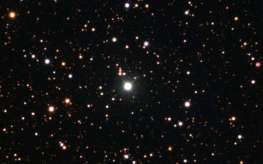
LONDON: The chemical element lithium has been found for the first time in material ejected by a nova. Observations of Nova Centauri 2013 made using telescopes at ESO’s La Silla Observatory, and near Santiago in Chile, help to explain the mystery of why many young stars seem to have more of this chemical element than expected. This new finding fills in a long-missing piece in the puzzle representing our galaxy’s chemical evolution, and is a big step forward for astronomers trying to understand the amounts of different chemical elements in stars in the Milky Way.

The light chemical element lithium is one of the few elements that is predicted to have been created by the Big Bang, 13.8 billion years ago. But understanding the amounts of lithium observed in stars around us today in the Universe has given astronomers headaches. Older stars have less lithium than expected, and some younger ones up to ten times more.


You might also like

Tesla driverless system to use updated radar technology

12/09/2016

Apple to develop its own self-driving technology

10/09/2016

Since the 1970s, astronomers have speculated that much of the extra lithium found in young stars may have come from novae – stellar explosions that expel material into the space between the stars, where it contributes to the material that builds the next stellar generation. But careful study of several novae has yielded no clear result up to now.

A team led by Luca Izzo (Sapienza University of Rome, and ICRANet, Pescara, Italy) has now used the FEROS instrument on the MPG/ESO 2.2-metre telescope at the La Silla Observatory, as well the PUCHEROS spectrograph on the ESO 0.5-metre telescope at the Observatory of the Pontificia Universidad Catolica de Chile in Santa Martina near Santiago, to study the nova Nova Centauri 2013 (V1369 Centauri). This star exploded in the southern skies close to the bright star Beta Centauri in December 2013 and was the brightest nova so far this century – easily visible to the naked eye.


Related Stories

Tesla driverless system to use updated radar technology

byCT Report
12/09/2016

WASHINGTON: Electric carmaker Tesla announced Sunday it was upgrading its Autopilot software to use more advanced radar technology. In a...

Apple to develop its own self-driving technology

byCT Report
10/09/2016

SAN FRANCISCO: Apple may not become an automaker, but it still wants to develop its own self-driving technology. The iPhone-maker's...

NASA spots slowest known magnetar

byCT Report
10/09/2016

WASHINGTON: Astronomers have found evidence of a magnetar - magnetised neutron star - that spins much slower than the slowest...

‘YouTubers’ outshining old-school television

byCT Report
09/08/2016

SAN FRANCISCO: A media revolution is taking place, and most people over 35 years of age aren’t tuned in. Millennial...

Next Post

OnePlus 2 excels One Million reservations in last 72 hours

  • Terms and Conditions
  • Disclaimer

© 2011 Customs Today -World's first newspaper on customs. Customs Today.

No Result
View All Result
  • Transfers and Postings
  • Latest News
  • Karachi
  • Islamabad
  • Lahore
  • National
  • Chambers & Associations
  • Business
  • About Us

© 2011 Customs Today -World's first newspaper on customs. Customs Today.