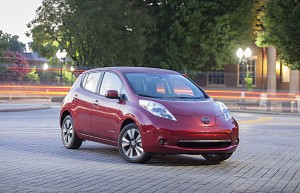
TORONTO: Chevrolet Volt 2015, Nissan Leaf 2015 are in a head to head competition with each other and with other rivals in Plug-in electric car market. In this connection during 2014 Plung-in electric cars sales rose over 100,000 units, to total roughly 118,500. Last year’s total represents a 27-percent gain over calendar year 2013.
It’s the third annual increase in full-year sales in the U.S. since modern electric cars first went on sale in December 2010; the 2013 total was about 93,000.In February, 1,198 Nissan Leafs were delivered–12 percent higher than January’s 1,070, the lowest number of Leafs that had been delivered in almost two years.


Still, last month’s sales bring the total number of Leafs delivered in the U.S. to 74,590.
The Chevrolet Volt range-extended electric car remains on a protracted runout for the current model before an all-new 2016 Volt goes on sale in the second half of this year.
Just 693 Volts were sold in February, better than January’s 542, which was the lowest monthly Volt total in more than two years.
That brings the total number of Volts delivered in the U.S. since December 2010 to 74,592–meaning that next month, it will almost surely lose the highest-total-sales crown that it’s held for two and a half years.
Sales numbers for the BMW i3 battery-electric car, with its optional range-extending REx engine, will come in later in the day.
As always, Tesla Motors refuses to report monthly sales, so we don’t know how many Model S electric sport sedans were sold.
The company’s lower-than-expected fourth-quarter results, announced last month, have led financial analysts to dive into the company’s balance sheet.
Some have concluded that Tesla is now building cars to stock at its U.S. outlets, as well as building them specifically to customer order.
The company’s continuing opacity in reporting operating metrics, however, makes any such speculation difficult to verify.