Customs Today
  • Home
  • Islamabad
  • Karachi
  • Lahore
  • National
  • Transfers and Postings
  • Chambers & Associations
  • Business
No Result
View All Result
Customs Today
  • Home
  • Islamabad
  • Karachi
  • Lahore
  • National
  • Transfers and Postings
  • Chambers & Associations
  • Business
No Result
View All Result
Customs Today
No Result
View All Result
Home Latest News

China completes implementation of VAT scheme

byCT Report
02/05/2016
in Latest News
Share on FacebookShare on Twitter

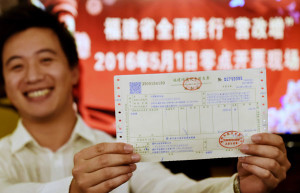
BEIJING: China has replaced all business tax with value-added tax (VAT) after extending the policy to cover the construction, real estate, finance and consumer services sectors.

They were the last four sectors still taxed based on their revenue.

You might also like

“Young entrepreneurs can reshape Pakistan’s economic future”

17/10/2026

NBP inks MoU with PowerChina arm for green financing collaboration

17/10/2026

VAT refers to a tax levied on the difference between a commodity’s price before taxes and its production cost. Revenue tax refers to a levy on a business’s gross revenues.

The expansion of the VAT scheme is expected to ease tax burdens by more than 500 billion yuan (76.9 billion US dollars) this year.

China’s service sector is increasingly picking up the slack of manufacturing as the world’s second-largest economy is shifting towards a more sustainable growth driven chiefly by consumer demand.

Expanding VAT to more service sectors is also part of the supply-side structural reforms authorities have been promising since last year to address the structural imbalances in the Chinese economy.

“We now have to pay an 11-percent value-added tax compared with 5.5 percent business tax in the past. It appeared that the tax rate had increased but the base on which the tax is collected has shrank so ultimately our tax burden is reduced,” said a treasurer with a construction firm in the northern Chinese city Tianjin.

The VAT scheme first started in 2012 as a pilot program in Shanghai, covering a number of services including transportation, IT, and logistics. It was later expanded nationwide and to cover other businesses.

Over the past four years, the VAT scheme has saved 640 billion yuan in taxes for businesses.

Related Stories

“Young entrepreneurs can reshape Pakistan’s economic future”

byCT Report
17/10/2026

ISLAMABAD: The president of the Islamabad Chamber of Commerce and Industry has called for turning Pakistan's youth into a driver...

NBP inks MoU with PowerChina arm for green financing collaboration

byCT Report
17/10/2026

LAHORE: National Bank of Pakistan (NBP) has signed a Memorandum of Understanding (MoU) with PowerChina|Integrity Energy Storage (Shanghai) Technology Co....

FBR implements faceless tax audit and assessment system from October 15

byCT Report
17/10/2026

ISLAMABAD: The Federal Board of Revenue (FBR) has implemented a new framework for conducting tax audits, assessments and related proceedings...

Pakistan explores new funding options with three UAE Banks to ease debt pressure

byCT Report
17/10/2026

ISLAMABAD: Finance Minister Muhammad Aurangzeb held separate meetings with delegations from Sharjah Islamic Bank, Abu Dhabi Commercial Bank and Ajman...

Next Post

Industrial Bank's net profits rise 6.51% to $7.72bn in 2015

  • Terms and Conditions
  • Disclaimer

© 2011 Customs Today -World's first newspaper on customs. Customs Today.

No Result
View All Result
  • Transfers and Postings
  • Latest News
  • Karachi
  • Islamabad
  • Lahore
  • National
  • Chambers & Associations
  • Business
  • About Us

© 2011 Customs Today -World's first newspaper on customs. Customs Today.