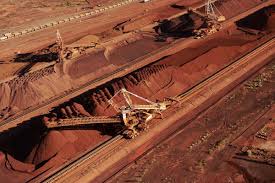
BEIJING: Another month, another story of strong Chinese imports of iron ore, with August set to be the highest so far this year. China’s imports of seaborne iron ore were around 88.9 million tonnes in August, according to vessel-tracking and port data compiled by Thomson Reuters Supply Chain and Commodity Forecasts. This makes August the strongest month this year, beating July’s 85.4 million tonnes and March’s 86.5 million, according to the data. The vessel-tracking data doesn’t align exactly with China’s official customs numbers as it excludes iron ore that arrives by rail from neighboring countries, and there are also slight discrepancies as to when cargoes are booked as having arrived. However, what the shipping data does confirm is that China’s demand for seaborne iron ore remains robust, and remarkably consistent. Total seaborne imports stood at 671.6 million tonnes as of the end of August, up 3.6 percent from the 648.1 million recorded in the same period in 2016.
Every month so far this year has seen imports of above 80 million tonnes, with the exception of February’s 75.8 million. However, if February was a 30- or 31-day month, imports would have topped 80 million tonnes as well. Overall, the picture that emerges of China’s iron ore imports so far in 2017 is one of steady, but not spectacular growth. This stands in sharp contrast to the rollercoaster ride of iron ore prices this year, with wild gyrations being recorded, although ultimately prices are currently more or less where they were at the start of the year. Singapore Exchange (SGX) iron ore futures, which are based on the Steel Index spot price, ended last year at $79.75 a tonne, slightly above the $77.60 they fetched at the close on Sept. 1. However, in the intervening months they have risen as high as $90.16 a tonne, reached on March 16, and dropped to a low of $53.66 on June 13. Dalian Commodity Exchange (DCE) iron ore futures, the main vehicle for Chinese domestic investors, have been somewhat less volatile, but have still traded in a fairly wide range of more than 200 yuan ($30.53) a tonne this year. They ended on Sept. 1 at 577.5 yuan a tonne, below the peak of 611 yuan reached on Feb. 21, but well up from the low of 395 yuan on June 14. It is often said that iron ore price tracks those of Chinese steel, but this relationship appears to have broken down somewhat this year.

Shanghai benchmark steel rebar futures have been on a consistent upward trajectory this year, rising to 3,993 yuan tonne at the close on Sept. 1, up 57 percent from the 2,545 yuan they fetched at the end of 2016. While they haven’t moved up in a straight line, steel futures haven’t exhibited the volatility of iron ore, trading in a fairly narrow range until the beginning June, with sustained gains since then. While the rally in steel prices has undoubtedly dragged iron ore along for the ride in recent months, it can’t explain the volatility in earlier months this year. It’s also unusual that the more volatile iron ore markets have been the ones outside China, contrasting with the prevailing consensus that investor bubbles inflate and deflate more easily in China, given the large numbers of day traders and small investors that utilize the DCE contract. Why has iron ore been volatile given the steady growth in China’s seaborne imports and the fairly consistent rally in steel prices?
Perhaps spot iron ore is becoming more like crude oil in the sense that the market can respond to short-term drivers that are largely divorced from the longer-term, underlying trend. Thus spot iron ore prices and SGX futures can rise and fall on the back of bullish or bearish news articles, or swings in investor sentiment caused by other economic indicators, such as the widely-watched Purchasing Managers’ Index. Overall, it appears that so far this year the more measured performance of iron ore and steel prices on Chinese exchanges is a better reflection of the market than the swings and roundabouts of the spot market and the SGX.