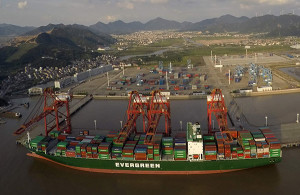
BEIJING: Chinese state-owned terminal operator China Merchants Holdings (CMH) has announced throughput growth in the first half of the year of 5.3%.
The majority of the company’s throughput comes from mainland China where its terminals volume increased by 5% to 30.4m teu. Ningbo Daxie’s throughput grew particularly strongly, by 17% to 1.4m teu.
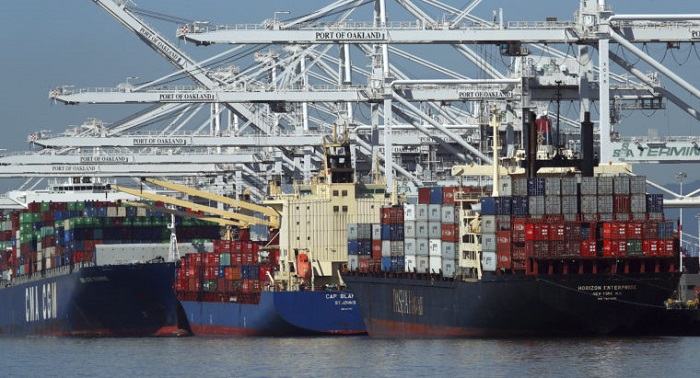

In Hong Kong, on the other hand, throughput fell by 18.7% to 2.28m teu. The port of Hong Kong has been facing declining throughputs for around a year, which has been widely attributed to slowing Chinese exports, a lack of yard space causing congestion and competition from nearby Shenzen.
A spokesperson for China Merchants told CM that this fall was because Modern Terminals Limited, which is part-owned by China Merchants and is Hong Kong’s second biggest terminal operator, installed a new operating system in the second half of 2014.
Modern Terminals Kwai Tsing Container Terminal installed a Navis N4 Terminal Operating System in October 2014.
A China Merchants spokesperson said they had no further comment on why the installation of a new operating system led to a decline in throughput. The spokesperson also would not confirm that Navis N4 was the operating system referred to.
Li Jianhong, chairman of CMH, said that profit from the group’s core ports operations had continued to expand steadily (by 10.4%) despite “the challenging external environment where the global economy is growing at a slower than expected pace and where China’s trade growth is decelerating”. Revenue generated from the core ports operation was up by 4.7% year-on-year.
Terminal Link, a joint venture between French shipping company CMA CGM and CMH increased its throughput by 12.6% to 6.4m teu.
In a results statement, CMH said that it had entered into a strategic cooperation framework with CMA CGM to investigate investment opportunities along the “one belt, one road” maritime corridor between Europe and China, with Terminal Link as a platform.
The company continued: “With its existing ports network highly coherent to “one belt, one road”, we have been looking for breakthroughs in the overseas portfolio, in terms of scale, strategic positioning and mode of development, by capitalising on the opportunities arising from the development of the “one belt, one road” initiatives.”
The company’s first “one belt, one road” terminal investment is Colombo International Container Terminal in Sri Lanka, which handled 0.67m teu in its first full first half-year of operations.