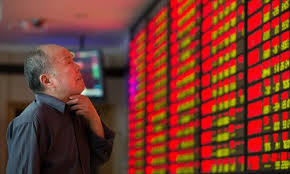
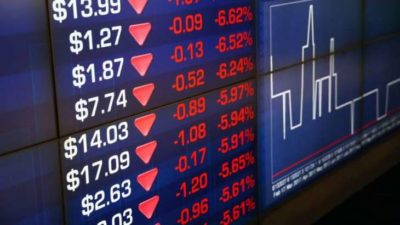
BEIJING: Banking and energy stocks dragged China’s market down on Thursday morning, as investors were left unimpressed by the latest measures taken by Beijing to bolster a slowing economy.
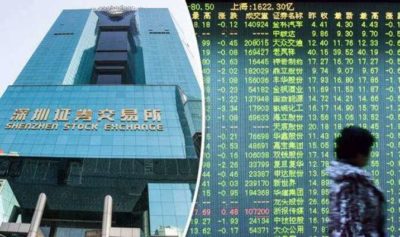
The CSI300 index fell 0.1 percent, to 5,301.98 points at the end of the morning session, while the Shanghai Composite Index lost 0.2 percent, to 5,096.37 points.
Late on Wednesday, China’s state council, or cabinet, encouraged local governments to maximise spending this year or face cuts to their 2016 budgets.
The cabinet also vowed to liberalise the consumer credit market, and support cross-border e-commerce.
Separately, China’s finance ministry said it has approved a second batch of local government debt swaps worth 1 trillion yuan ($161.2 billion), doubling the size of the existing swap program announced in March.
The widely expected moved failed to offer fresh stimulus to the market, though the scheme would improve banks’ balance sheets.
Banks, however, remained weak, weighed down by MSCI’s decision not to include mainland stocks into its emerging market benchmark index.
The sector was seen as potentially a major beneficiary if MSCI had decided to include mainland shares.
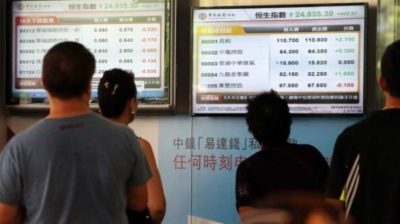
But the Hong Kong market rebounded on Thursday.
The Hang Seng index added 0.9 percent, to 26,923.87 points, while the Hong Kong China Enterprises Index gained 0.8 percent, to 13,730.43.
Growing fears in the region over the spread of Middle East Respiratory Syndrome (MERS) following more deaths in South Korea had prompted a sell off on Wednesday afternoon, after media reports of a suspected MERS case in Hong Kong, analysts said.
Controller of the Center for Health Protection Leung Ting-hung told a press briefing Thursday morning that no confirmed case of MERS has been found in Hong Kong so far, official Xinhua news agency reported.