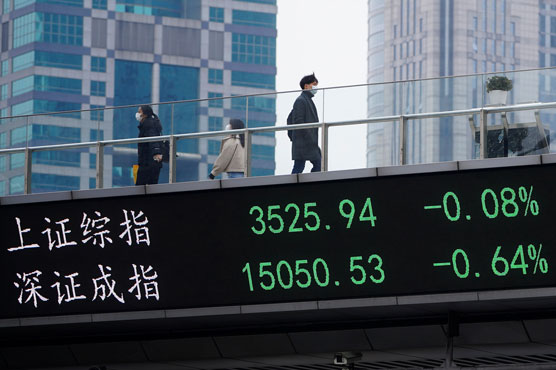
BEIJING: Chinese inflation rebounded marginally in December, the government said here the other day, but economists warned of deflationary threats and called for more monetary stimulus to boost slowing growth in the world’s second-largest economy.
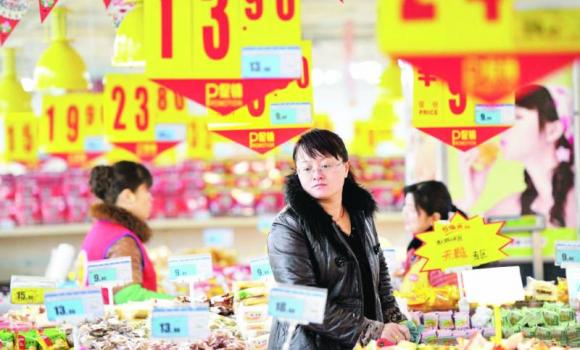
The consumer price index (CPI) rose 1.5 percent year-on-year in December, the National Bureau of Statistics announced, matching market estimates and marking an increase from a five-year low of 1.4 percent in November.

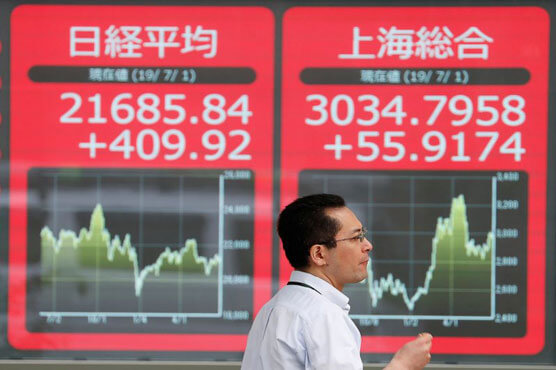
But for full year 2014, consumer inflation was 2.0 percent, the bureau said, down from 2.6 percent in 2013 and well below the government’s target of about 3.5 percent.
Also, the producer price index (PPI) a measure of costs for goods at the factory gate and a leading indicator of the trend for CPI declined for the 34th straight month.
The 3.3 percent year-on-year fall was larger than the 3.1 percent median forecast in a Bloomberg News survey, and the biggest since September 2012. The last PPI increase was in January 2012.
Moderate inflation can be a boon to consumption as it encourages consumers to buy before prices go up, while falling prices encourage shoppers to delay purchases and companies to put off investment, both of which can hurt growth.
“Authorities need to be vigilant on the rising risk of deflation,” ANZ economists Liu Li-Gang and Zhou Hao said in a note after the data were released.
China’s economy expanded 7.3 percent in the third quarter of last year, the slowest since 2009 at the height of the global financial crisis, and has showed continued weakness in the fourth quarter.
“We believe the weak inflation data in December was mainly the result of falling commodity prices, worsening overcapacity in upstream industries and weak growth momentum,” Nomura economists said in a note.
“We expect inflation to remain low in the coming months with concerns over deflation risks continuing to rise.”
China announces fourth-quarter and annual growth figures on January 20.
The data suggest authorities will announce fresh monetary easing, the Nomura economists said, adding they expect the central People’s Bank of China (PBoC) to cut interest rates in the second quarter of 2015 while lowering the amount of cash banks must keep on hand once in every quarter this year.
Reducing the reserve requirement ratio (RRR) increases the amount of money banks can lend out and help boost economic activity.
The last full-fledged RRR cut was in May 2012, though the PBoC carried out targeted reductions last year, part of a series of “mini-stimulus” steps introduced from April when growth began to slow.
The PBoC in November cut interest rates for the first time in more than two years in a bid to boost growth, though economists have said that move alone would be insufficient.
Liu and Zhou of ANZ also called for more monetary stimulus.
“In our view, Chinese authorities will need to use both structural reform measures as well as monetary policy tools to head off the risk of deflation, especially when domestic demand remains weak and commodity and energy prices continue to fall,” they wrote.
“We therefore believe that RRR cuts, or other monetary policy easing measures with similar effects, can be expected in (the first quarter of ) 2015.”
Food prices drove December’s inflation uptick, according to statistics bureau figures, rising 2.9 percent on-year from 2.3 percent in November.
Nonetheless falling oil and farm commodity prices are likely to add downward pressure this year, according to Julian Evans-Pritchard, China economist at Capital Economics.
But he wrote in a note: “With most households and firms set to benefit from the fall in inflation, we think concerns about deflation, at least in China’s case, are overplayed.”
Chinese authorities are trying to transform the country’s economy to one whereby its increasingly wealthy consumers drive growth. Chinese President Xi Jinping regularly speaks of a “new normal” in which GDP growth moderates to more sustainable levels as the country’s economy ma