
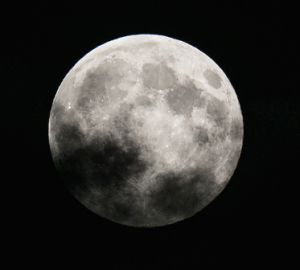


BRENT: The Moon’s geologic history is far more complex than previously thought, according to preliminary results from China’s Chang’E-3 spacecraft and its ‘Jade Rabbit’ lunar rover.
The findings, reported in the journal Science, indicate a world that experienced multiple lava flows, interspersed with explosive pyroclastic volcanism.
“The pyroclastic events were an unexpected surprise,” says the study’s lead author Professor Long Xiao of the China University of Geosciences.
“Images of the landing site show a featureless terrain, however the radar data found many layers of structure below the surface with many episodes of volcanism including lava flows and explosive eruptions,” says Xiao.
China’s Chang’E-3 lander touched down in the northern Mare Imbrium basin on the lunar nearside on 14 December, 2013.
High-resolution images returned by both the Jade Rabbit rover and the lander, show the landing site was near the rim of a 450-metre-wide crater, estimated to be between 27 and 80 million years old.
The landing site is a relatively flat surface covered in a layer of thin lunar soil known as regolith. This is strewn with basalt boulders up to four metres in size, and numerous small craters ranging from a few centimetres to tens of metres in diameter.
Just a few hours after landing, the Jade Rabbit rover travelled 114 metres in a zig zag pattern using two ground penetrating radar antennas to record constant measurements of the sub-surface geology down to depths of 400 metres.
The radar detected nine separate sub-surface layers including regolith, ejecta from the nearby crater, and numerous layers of lava with different compositions.
Xiao and colleagues attribute these layers to ancient lava flows and the weathering of rocks and boulders into regolith over the last 3.3 billion years or so.
“The big surprise was one layer called layer G, which consisted of very fine material, not thick lava flows,” says Xiao.

Karachi Port sets 138-year cargo handling record
KARACHI: Pakistan's maritime sector has achieved a major milestone as Karachi Port set a new record in its 138-year history...


