

LONDON: Near the Hanjiang River in central China, amid the lush, pine-covered Qinling Mountains that once were dotted with Daoist shrines and where giant pandas now roam, is the Dayu Cave. Its entrance is small, only a few meters high and wide. Inside, a matrix of passageways and chambers branch off from a main tunnel that runs a little more than a mile. The air is humid, and ancient stalagmites swell upward from the cave floor.
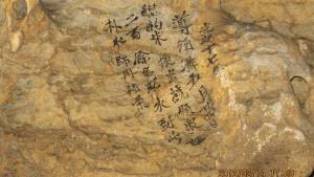
Climatologist Liangcheng Tan first visited the cave a decade ago and noticed ink inscriptions written on its walls and formations. He figured they were poems and didn’t think much of them, as it is common to find poems that scholars wrote long ago in Chinese caves. But when Tan visited again in 2009, he studied the inscriptions more thoroughly and realized they were drought records dating back half a millennium.
“Previous people didn’t carefully examine the inscriptions,” says Tan, an associate professor at the Chinese Academy of Sciences. But he knew they could provide an unprecedented opportunity to study climate change in the region, matching chemical analyses of the stalagmites to the drought record inscriptions.

Karachi Port sets 138-year cargo handling record
KARACHI: Pakistan's maritime sector has achieved a major milestone as Karachi Port set a new record in its 138-year history...