
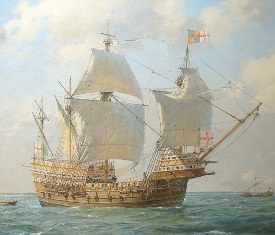


WASHINGTON: The English navy was known throughout history as one of the largest and most powerful fleets to ever sail the seas of the Earth.
While some historians would attribute its size and strength to the leadership of English monarchs, such as the Tudor Henry VIII, recent evidence taken from the wreckage of a 16th century warship suggest that the growth of the English navy could also be owed to the development of early fish trade overseas.
In an analysis of cod bones retrieved from the wreck of the Tudor ship Mary Rose, scientists from the University of Cambridge, University of York and the University of Hull discovered that the fish supplies stored in the vessel had been caught in unexpectedly distant waters such as the fishing grounds of Iceland and the North Sea. This is in spite of the fact that England already had highly developed local fisheries during the 16th century.
The results from one of the bone samples also suggest that some of the cod stored in the Mary Rose were caught in waters as far away as Canada’s Newfoundland.
According to the researchers, the findings point to the importance naval provisioning in helping expand the early fish trade in other areas of the world. This expansion, in turn, allowed the English to grow.
The team said that the commercial exploitation of fish supplies and the development of naval power helped reinforced the concept of globalization among the people of Renaissance Europe.

Karachi Port sets 138-year cargo handling record
KARACHI: Pakistan's maritime sector has achieved a major milestone as Karachi Port set a new record in its 138-year history...


