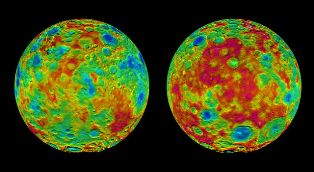


WASHINGTON: Colorful new maps of Ceres, based on data from NASA’s Dawn spacecraft, showcase a diverse topography, with height differences between crater bottoms and mountain peaks as great as 9 miles (15 kilometers).
Scientists continue to analyze the latest data from Dawn as the spacecraft makes its way to its third mapping orbit.
“The craters we find on Ceres, in terms of their depth and diameter, are very similar to what we see on Dione and Tethys, two icy satellites of Saturn that are about the same size and density as Ceres. The features are pretty consistent with an ice-rich crust,” said Dawn science team member Paul Schenk, a geologist at the Lunar and Planetary Institute, Houston.
Some of these craters and other features now have official names, inspired by spirits and deities relating to agriculture from a variety of cultures. The International Astronomical Union recently approved a batch of names for features on Ceres.
The newly labeled features include Occator, the mysterious crater containing Ceres’ brightest spots, which has a diameter of about 60 miles (90 kilometers) and a depth of about 2 miles (4 kilometers). Occator is the name of the Roman agriculture deity of harrowing, a method of leveling soil.

Karachi Port sets 138-year cargo handling record
KARACHI: Pakistan's maritime sector has achieved a major milestone as Karachi Port set a new record in its 138-year history...