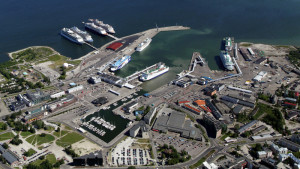
MOSCOW: Container traffic through Russia’s Baltic seaports plummeted 32 percent in the first half, showing that even Russian ports that serve as gateways to the country’s most important cities, like Moscow and St. Petersburg, will not be able to escape the wrath of the Russian recession.
Russia’s baltic ports saw their first-half volume fall to 976,080 twenty-foot-equivalent units from 1.44 million TEUs in the same period of 2014, according to data of the Association of Commercial Seaports of Russia.
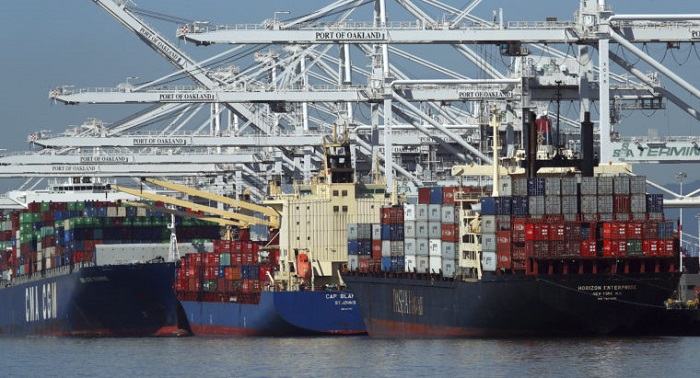

Exports fell by 33 percent to 493,430 TEUs, with loaded containers down 2 percent to 317,840 TEUs and empties dropped 57 percent to 175,590 TEUs. Imports for the reporting period were down 31 percent to 482,650 TEUs.
A decline was observed at all the region’s seaports. In the case of the Kaliningrad seaport, first-half traffic declined by 59 percent to 73,560 TEUs while St. Petersburg fell by 29 percent to 861,830 TEUs and Ust-Luga was down 22 percent to 40,690 TEUs. Russia’s container trade has been buffeted by low oil prices, the devaluation of the ruble, and sanctions and counter sanctions originating in the conflict in Ukraine.
For all of 2014, traffic at Russia’s Baltic ports amounted to 2.81 million TEUs, of which exports were 1.43 million TEUs and imports 1.38 million, while cabotage amounted to 27 TEUs. Last year, Big St. Petersburg handled 2.37 million TEUs, while Kaliningrad seaport reached 325,200 TEUs and Ust-Luga saw 106,800 TEUs.