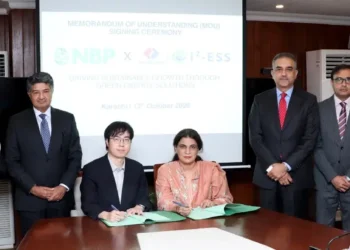
SINGAPORE: The couple behind the popular Kay Lee Roast Meat chain of restaurants have been jailed and fined after being convicted of evading nearly S$55,000 in income taxes, the Inland Revenue Authority of Singapore (IRAS) said.
Ha Wai Kay, 64, was the owner of the chain before he sold it to the Aztech Group for S$4 million in 2014. His wife Kong Kuee Chin, 69, was the owner of Wan Tat Eating House, but helped in keeping accounting records for both businesses. In 2009 and 2010, the couple under-declared Kay Lee’s sales figures by more than S$325,000 in order for Ha to evade income taxes of S$54,917.15. Both were sentenced to four weeks’ jail and fined $164,751.45 each – three times the amount of tax evaded.
Two further charges of income tax evasion were taken into consideration. Ha and Kong have pleaded guilty and made full payment of the income tax evaded, IRAS said. Kong, who was in charge of recording the sales amounts, would manually record the daily cash collections and expenditures for both Kay Lee and Wan Tat into her diary, and provide a total monthly sales income for both businesses in one lump sum, to their accountant who assisted in the preparation of their statement of accounts and their income tax returns.
IRAS investigations found that in 2009 (for Year of Assessment 2010), Kong had knowingly provided Kay Lee’s total sales income as S$531,924, when the actual sales income was S$693,839. Similarly, in 2010 (YA2011), Kong had knowingly provided Kay Lee’s total sales income as S$665,413, when the actual sales income was S$829,335. Ha also under-declared his income by S$161,915 in YA2010 and S$163,922 in YA2011, and was undercharged for income tax by a total of S$54,917.15, IRAS said.
“IRAS takes a serious view of non-compliance and tax evasion. There will be severe penalties for those who wilfully evade tax. The authority will not hesitate to bring offenders to court,” it said, adding that those who evade taxes may face a jail term and a penalty of up to four times the amount of tax evaded. The tax authority also urged businesses or individuals to disclose past tax mistakes. Such disclosures will be treated as mitigating factors, IRAS said. Informants who provide information or documents that lead to evaded tax being recovered will get a cash reward of 15 per cent of the tax recovered, capped at S$100,000, it added.
There are also initial signs that the weakness in exports has spilled over beyond the goods sector into services. The report said Singapore stands out because its deteriorating competitiveness comes alongside flagging economic growth, negative inflation and an extreme dependence on exports.
This mix is likely to prompt Singapore’s central bank to ease monetary policy at its next meeting in October, the report’s authors said. Separately, a report released last Friday by ANZ Research noted that exports across Asia – with the exception of Vietnam – have been shrinking for two years amid weak demand. But with governments in the region pumping money into stimulating their economies, trade in Asia is becoming increasingly import-driven.
As domestic demand recovers, import growth should start gaining traction next year even though exports might still be lacklustre, the report said. However, this might not turn out to be the case in Singapore, which was once again highlighted as a laggard. Domestic demand is expected to remain weak on the back of poor consumer confidence.
“The slump in consumer confidence suggests consumers will remain cautious, especially with the risk of external weakness spilling into domestic activity,” the report’s authors noted. At the other end of the spectrum, the Philippines and Vietnam have reported the most resilient domestic demand among their fellow Asian economies.