
LONDON: US crude oil exports ban is headed for lifting in a matter of a few months the most, if the rumor mill is true in the other side of the Atlantic. This is thought to have an important impact in both the crude oil, but most importantly the tanker market. According to the latest weekly report from shipbroker Gibson, “the crude tanker market will clearly benefit if restrictions are lifted, as it will support more seaborne trade both in and out of the US. In terms of exports, light crude oil is likely to head across the Atlantic to Europe, lowering the region’s “appetite” for light crude from other sources, primarily West Africa. This in turn will free additional West African volumes for long haul shipments to Asia Pacific customers. There is also a possibility that US crude could also head directly to Asia”, said the shipbroker.
On the other hand, the shipbroker noted that “changes in legislation could be bad news for the product tanker market. The EIA suggested that refiner margins would be under downwards pressure without the current restrictions on crude oil exports. If that is the case, then freeing up more crude oil for exports will at the very least limit the growth in products exports, both to Latin/South America and across the Atlantic Basin”.
According to Gibson, “the evidence is growing that US oil shale oil producers are not just facing increasing difficulties but in some cases struggling to survive on the back of persistent low oil prices. According to Standard & Poor’s, 16 US oil production companies have already defaulted in 2015 and another 8 are at high risk of doing so within the next 12 months. Difficulties are also mounting to obtain capital to finance continued operations. Exploration & production companies raised around $9-10 billion per quarter from bond issues during the first half of this year and just $1.7 billion in July/August. As a result, US crude oil production has started to fall, with the Energy Information Administration (EIA) consistently revising down the outlook for domestic crude output through to the end of 2016. The agency’s latest forecast is for domestic crude oil production to decline on an annual average basis by 0.4 million b/d to 8.8 million b/d in 2016″.
The shipbroker added that “as conditions become more and more challenging for US shale producers, it is not surprising that the subject of removing restrictions on US crude exports is gaining a momentum. Recently committees of both the US Senate and US House have initiated and passed legislation seeking to lift the ban on crude oil exports. It is expected that the full US House will consider this bill later this month. There are a lot of arguments both for and against changing the legislation, including the impact on domestic crude and gasoline prices as well as the effect on US domestic oil producers and refiners. The EIA has prepared a report examining the implications of removing current restrictions on US crude exports. The study concluded that unrestricted crude exports are unlikely to increase domestic gasoline prices, supporting the case for lifting the ban. However, at the same time, the EIA suggested that if domestic production stays close to current levels, ending the ban on exports will not lead to higher prices or production of US crude”, Gibson concluded.
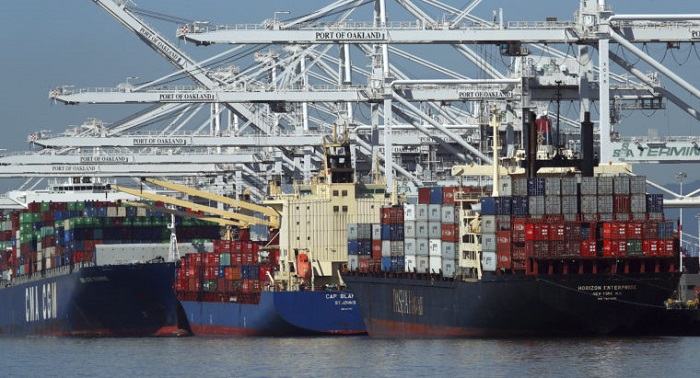
Shipping activity at Port Qasim on February 11
KARACHI: Three ships namely, Glen Canyon, Al-Salam- II and TSM Pollux carrying Containers, Gas oil and Palm oil were arranged...