HAVANA: Many American cigar smokers dream of smoking a Cuban, legally. We’re talking about Cuban cigars, which have been banned in the U.S. since the 1962 trade embargo against the Castro government. But as both countries now try to normalize relations, Cuban cigars soon may be available to American consumers. Mark Strassmann followed a trail of smoke to Havana:
Along Havana’s waterfront, no one asks politely before lighting up. No one complains about the smell or the smoke. The annual Habanos festival is the most cigar-friendly spot on the planet, an international celebration of Cuba’s pride: its cigars.


“Cuba and cigars go together. It’s like France and wine — they’re one and the same,” said David Savona.
For two decades, Savona has written about cigars AND Cuba for Cigar Aficionado, where he’s now executive editor. He and Strassmann took a drive down Havana’s famed Malecón esplanade — the sort of thing you’d read about in his lifestyle magazine.
“The humidity, the sunshine, the open air — it just begs for a cigar,” Savona said.
Cuban cigars, often called “Cubans,” come wrapped in mystique. Fidel Castro made them his trademark — before quitting for health reasons. Winston Churchill loved the cigars, as did President Kennedy. Before he enacted the trade embargo against Cuba in 1962, he stocked his private humidor with 1,200 Petit Upmanns.
On July 1, President Obama announced an end to the diplomatic isolation of Cuba, and on August 14 the American flag will fly once again at the U.S. Embassy in Havana. The president has also called on Congress to lift the embargo.
These steps could once again allow the sale of Cuban cigars in the U.S.
Not surprisingly, Savona’s magazine has supported an end to the embargo.
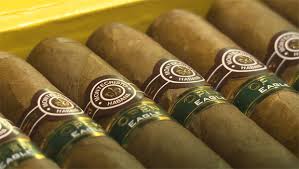
At La Corona, one of Cuba’s largest cigar factories, workers hand-roll 30,000 cigars a day, five million a year. They blend different tobacco leaves for the most famous brands in the world — Cohiba, Montecristo, Hoyo de Monterrey — with each cigar essentially a sculpture.
“Absolutely,” said Savona. “It’s a work of art. Very hard to do. Imagine if someone gave you a pile of leaves right now and said turn that into a cigar. You’d have a hard time. I’d have a hard time!”
Those leaves come from Pinar del Rio province, western Cuba, often considered the world’s premier tobacco-growing region.