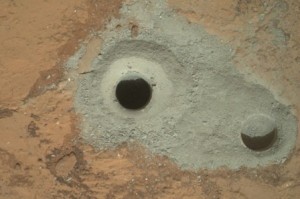
HONG KONG: Samples obtained by the Mars Rover Curiosity during recent drilling activity appear to indicate that acidic conditions were once present in the region of the Red Planet known as Mount Sharp, officials from NASA.
Curiosity, which has been investigating and examining Mount Sharp on Mars, recently took a drilled rock sample from the mountain. Its analysis has revealed some interesting possibilities that lay in the far-off past for the dusty red planet. The sample, taken from a rock that NASA has named “Mojave 2,” actually took two tries to gather successfully; Curiosity had attempted to extract specimens from an earlier sample only to break it. However, NASA scientists were undeterred, and Mojave 2 eventually revealed its secrets: there were large quantities of a sulfate mineral in the samples that develops in acidic climates. Known as jarosite, this material seems to indicate that there were more acidic conditions near Mount Sharp than in other places Curiosity has drilled in the past.
Scientists from the US space agency are still deep in consideration as to why Mojave 2 had such high levels of evidence of acidic water. The question to be answered now is whether Mount Sharp was shaped by retreating acidic water that had at one time blanketed the region or if sediments had piled up over time instead.


The mechanism behind Curiosity extracting a viable sample from Mojave 2 is a new, low-percussion use of existing tools on the rover. Initially, Curiosity’s hammer and chisel tools were used to drill at a slow, steady rate to not cause excessive damage to the rocks, but rover mission engineers soon discovered that the rover was still destroying rocks in an attempt to gather data from them. However, mission scientists switched to a low percussion rate instead; while it might have taken ten minutes to drill the two and a half inches into Mojave 2, the drilling was successful. With the new method proving to be so effective, it will be used to gather several different samples around the circumference of Mount Sharp before Curiosity begins its path up the side of the mountain.