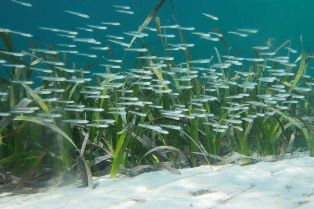


CANADA: Human damage to seagrass meadows leads to the release of ancient carbon stores, a study has found.
Australian researchers studied sea grass meadows in Jervis Bay that had been disturbed by seismic testing in the 1960s.
“We found that in the area that had been disturbed, there had been a 72 per cent decline in the amount of organic carbon,” marine ecologist Dr Peter Macreadie for Deakin University and the University of Technology, Sydney said.
The findings suggest protecting and restoring seagrass meadows could be an important strategy in mitigating climate change, say the authors in today’s issue of the Royal Society journal Proceedings B.
Seagrass is a flowering plant that forms underwater meadows around coasts on every continent except Antarctica. Seagrass meadows act as a nursery ground for juvenile fish, cycle nutrients, stabilise our coastlines and prevent erosion.
But, they are also very good at sequestering carbon.
“What we’ve learnt about seagrasses is they can capture and store carbon at a rate of 40 times faster than tropical rainforest,” said Dr Macreadie.
He said seagrasses lock away the carbon for much longer than forests on land.
“They store the carbon for millennial timescales,” said Dr Macreadie. “It will stay there more or less permanently so long as you don’t disturb those ecosystems.”

Karachi Port sets 138-year cargo handling record
KARACHI: Pakistan's maritime sector has achieved a major milestone as Karachi Port set a new record in its 138-year history...