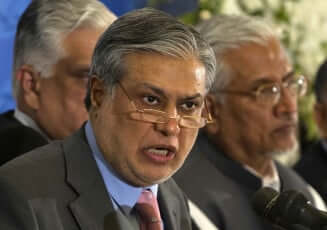
ISLAMABAD, Feb 15 (APP): Minister for Finance and Revenue Senator Muhammad Ishaq Dar presented the Finance (Supplementary) Bill, 2023 in the National Assembly proposing to impose new taxes of Rs 170 billion to minimize the fiscal deficit.
Tabling the supplementary bill in the House, the minister said the government had proposed to increase the General Sales Tax rate on the import of luxury items from the existing 17% to 25%, while the overall General Sales Tax rate had also been raised from 17% o 18%.
He said the government had recently held talks with the International Monetary Fund (IMF) to revive the programme, during which it agreed to take some tough decisions for streamlining the deteriorating condition of the economy.
He said the new revenue measures would not affect the poor segments of society as most of the new taxes were being imposed on luxury items not used by them.
The minister said in order to help the poor cope with the rising inflation, the government had also proposed a Rs 40 billion increase in the budget of the Benazir Income Support Programme (BISP).
“The government has proposed to increase the BISP budget from Rs 360 billion to Rs 400 billion, by allocating additional funds of Rs 40 billion to benefit the (BISP) beneficiaries,” he added.
He said the government also proposed to impose a 20% or Rs 50,000 (whichever is higher) tax on one business or a first-class air ticket, besides proposing a 10% advance tax on the bills of marriage ceremonies.
It was also suggested to increase the Federal Excise Duty (FED) on cigarettes, and sugary drinks, whereas, on cement, the duty was raised from Rs 1.5 per kg to Rs 2 per kg, he added.
Ishaq Dar made it clear that during the talks, the IMF had expressed satisfaction with the performance of the Federal Board of Revenue (FBR) and hoped that the revenue collection target set for the year 2022-23 would be achieved easily.
The additional proposed tax measures of Rs 170 billion, he added, were not meant to bridge the gap of the collection target, rather the same would help minimize the budget deficit for the FY23.
He said the IMF was much concerned over the huge losses, such as the power sector was facing losses of around Rs 1,400 billion per year. From 2013 to 2018, the PML-N (Pakistan Muslim League-Nawaz) government was fully focused on reducing the power circular debt. But due to the poor economic policies of the PTI (Pakistan Tehreek-e-Insaf) government, the circular debt jumped from Rs 1,148 billion in 2018 to Rs 2,467 billion now.
The (incumbent) government had revised down the circular debt for FY23 from Rs 855 billion to Rs 336 billion, he added.
Ishaq Dar said due to the reforms being taken by the government, the economy would first get stabilized and then witness rapid growth in the coming years. Resultantly, “income of the people will increase, rupee value will stabilize, and fiscal deficit and current account deficit (CAD) will reduce” and the country’s gross domestic product would grow by 4% in the next fiscal year (2023-24), he added.
He said the issue of Letters of Credit (LCs) would be resolved soon which would help increase the exports.
The minister said the prime minister had recently announced the historic Rs 2,000 billion Kissan Package, under which Rs 1,000 billion had been released so far. Similarly, he added, under the Youth Loan Scheme, the government would provide Rs 30 billion to the youth during the current year.
In the Information Technology sector, the minister said, the government had allowed those earning foreign exchange in Pakistan to keep 35% of their total income in their foreign exchange currencies. The step would help increase the inflow of foreign remittances from the IT sector from $2.5 billion to over $4 billion per year.
Ishaq Dar said Pakistan needed a ‘charter of economy’, for which all the political leaders should get together and vow to play role in strengthening the economy irrespective of their party affiliations. “A future roadmap should be determined to bring the economy out of crisis,” he added.