Customs Today
  • Home
  • Islamabad
  • Karachi
  • Lahore
  • National
  • Transfers and Postings
  • Chambers & Associations
  • Business
No Result
View All Result
Customs Today
  • Home
  • Islamabad
  • Karachi
  • Lahore
  • National
  • Transfers and Postings
  • Chambers & Associations
  • Business
No Result
View All Result
Customs Today
No Result
View All Result
Home International Customs Afghanistan

Decline of Afghanistan’s Manufacturing Heart

byCT Report
22/03/2018
in Afghanistan
Share on FacebookShare on Twitter

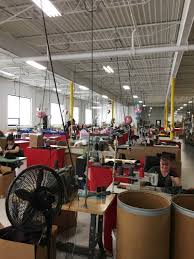
KABUL: The provincial capital Pul-e Khomri was once home to thriving textile, sugar and cement industries. Local business leaders warn that a combination of poor investment and the ongoing insurgency meant that losses were proving hard to reverse.
 

You might also like

Afghanistan’s Economic Growth Expected To Reach 3.3% In 2020

04/02/2020

Afghan Parliament Approves 2020 Fiscal Year’s Budget

23/01/2020

Originally built by a Czech construction company more than 50 years ago, the factory – which has two separate plants – was privatised in 2006.

Although cement is so bulky to transport that it is generally produced domestically, cheap imports from Iran and Pakistan continue to flood the country.

The market has also been affected by the exit of the international forces in 2014, after which demand for building supplies fell dramatically.

Maruf Sarwari is the managing director of the Afghan Cement Company, which recently took over both of the Ghori cement plants.

He said that although they had the capacity to supply enough high-quality cement to satisfy all domestic needs, they were not only threatened by cheap imports of Pakistani cement but also hampered by an erratic power supply.

Although Baghdis is believed to have extensive reserves of coal, it has been hard to ensure a consistent supply from local mines to power the plant’s machinery.


“We have to export the coal that we extract from the mines of Karakar, Nahrin, Dara-e Souf and Ash Pushta in order to boost state revenue,” he said.

Out of all the main industries in the province, the Baghlan Sugar Factory, which was Afghanistan’s first enterprise of this kind when it was founded in 1940 with German investment, is doing relatively well.

Closed by the violence of the civil war in 1991, it was reopened again with German assistance  in 2006.

Its director Ghulam Sakhi Sakhizada said that each 50 kilogramme bag of sugar fetched a market price of 2,400 Afghani, and production was steadily rising.

Related Stories

Afghanistan’s Economic Growth Expected To Reach 3.3% In 2020

byadmin
04/02/2020

According to a World Bank report, Afghanistan’s economy has grown by 2.9% in 2019 and is expected to reach 3.3%...

Afghan Parliament Approves 2020 Fiscal Year’s Budget

byadmin
23/01/2020

The Afghan parliament approved the coming fiscal year’s budget plan. It gained a majority of votes just ahead of the...

Afghan Government Receives Over $11mn In Revenues from ATRA

byadmin
14/01/2020

The Afghanistan Telecom Regulatory Authority (ATRA) has transferred 878 million Afghanis ($11.3mn) to the special account of the Ministry of...

Govt Spends Extra 1.6 Billion Afs From Code 91: Commission

byadmin
30/12/2019

The government spent 2.6 billion Afghanis from Code 91 this year, but only 1 billion Afghanis was supposed to be...

Next Post

Taiwan shares end flat as earlier gains eroded

  • Terms and Conditions
  • Disclaimer

© 2011 Customs Today -World's first newspaper on customs. Customs Today.

No Result
View All Result
  • Transfers and Postings
  • Latest News
  • Karachi
  • Islamabad
  • Lahore
  • National
  • Chambers & Associations
  • Business
  • About Us

© 2011 Customs Today -World's first newspaper on customs. Customs Today.