

Customs Today
  • Home
  • Islamabad
  • Karachi
  • Lahore
  • National
  • Transfers and Postings
  • Chambers & Associations
  • Business
No Result
View All Result
Customs Today
  • Home
  • Islamabad
  • Karachi
  • Lahore
  • National
  • Transfers and Postings
  • Chambers & Associations
  • Business
No Result
View All Result
Customs Today
No Result
View All Result
Home Science & Technology Science

Deserts could hold more carbon than all the plants on land

byCustoms Today Report
03/08/2015
in Science, Science & Technology
Share on FacebookShare on Twitter

You might also like

Tesla driverless system to use updated radar technology

12/09/2016

Apple to develop its own self-driving technology

10/09/2016

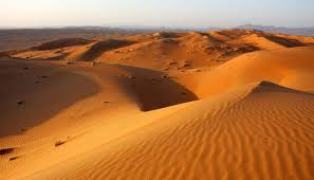
LONDON: The world’s deserts may be storing some of the climate-changing carbon dioxide emitted by human activities, according to a new study which found that massive aquifers underneath deserts could hold more carbon than all the plants on land. The study estimates that the world’s desert aquifers contain roughly 1 trillion metric tonnes of carbon – about a quarter more than the amount stored in living plants on land.
Humans add carbon dioxide to the atmosphere through fossil fuel combustion and deforestation. About 40 per cent of this carbon stays in the atmosphere and roughly 30 per cent enters the ocean. Scientists believed the remaining carbon was taken up by plants on land, but measurements show plants don’t absorb all of the leftover carbon. Scientists have been searching for a place on land where the additional carbon is being stored – the so-called “missing carbon sink.”
The new study suggests some of this carbon may be disappearing underneath the world’s deserts – a process exacerbated by irrigation. Scientists examining the flow of water through a Chinese desert found that carbon from the atmosphere is being absorbed by crops, released into the soil and transported underground in groundwater – a process that picked up when farming entered the region 2,000 years ago. Underground aquifers store the dissolved carbon deep below the desert where it can’t escape back to the atmosphere, researchers found. The new study estimates that because of agriculture roughly 14 times more carbon than previously thought could be entering these underground desert aquifers every year.

Related Stories

Tesla driverless system to use updated radar technology

byCT Report
12/09/2016

WASHINGTON: Electric carmaker Tesla announced Sunday it was upgrading its Autopilot software to use more advanced radar technology. In a...

Apple to develop its own self-driving technology

byCT Report
10/09/2016

SAN FRANCISCO: Apple may not become an automaker, but it still wants to develop its own self-driving technology. The iPhone-maker's...

NASA spots slowest known magnetar

byCT Report
10/09/2016

WASHINGTON: Astronomers have found evidence of a magnetar - magnetised neutron star - that spins much slower than the slowest...

‘YouTubers’ outshining old-school television

byCT Report
09/08/2016

SAN FRANCISCO: A media revolution is taking place, and most people over 35 years of age aren’t tuned in. Millennial...

Next Post

Astronomers discovered the most powerful aurora ever observed

  • Terms and Conditions
  • Disclaimer

© 2011 Customs Today -World's first newspaper on customs. Customs Today.

No Result
View All Result
  • Transfers and Postings
  • Latest News
  • Karachi
  • Islamabad
  • Lahore
  • National
  • Chambers & Associations
  • Business
  • About Us

© 2011 Customs Today -World's first newspaper on customs. Customs Today.