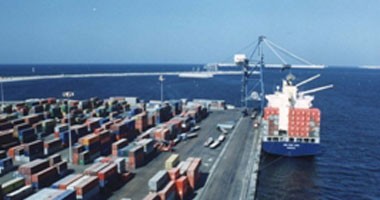
WASHINGTON: Trade facilitation refers to broader range of measures that aims to streamlining the movement of goods, reduction of red tape, procedural barriers including tariff structures and other broad trade supporting services. Trade facilitation impacts on the percentage growth of Gross Domestic Product (GDP) and international trade. Globalisation, deregulation, logistics integration and containerisation have also impacted all sectors of Bangladesh in general and maritime sector, in particular. With the adoption of deregulation policy in the 80’s and open market economic policy in the 90’s, trade growth in Bangladesh accelerated necessitating efficient cargo handling through ports, particularly the Chittagong Port. The foreign trade accounts for approximately 38 per cent of GDP. The average maritime dependency factor of the country is about 33 per cent (last five years).
In Bangladesh, trade facilitation encompasses the area of the growth of container, reduced turnover time and occupancy rate of vessels, enhancement of the physical infrastructural facilities of port and cargo handling capacity, improvement of transportation facilities along with the mode of transportation, enhancement of the overall capacity of the Inland Container Depot (ICD), River Inland Container Depot (RICD) and digitisation of cargo handling and services across the border. It contributes to lowering the costs of trade, increasing market competitiveness in the international market and enhancing economic wealth. Trade facilitation is effected by investment in the improvement of port facilities, transportation infrastructures inside and outside the ports, Information Communication technologies (ICT), handling and custom clearance facilities and environmental aspects of the ports etc.
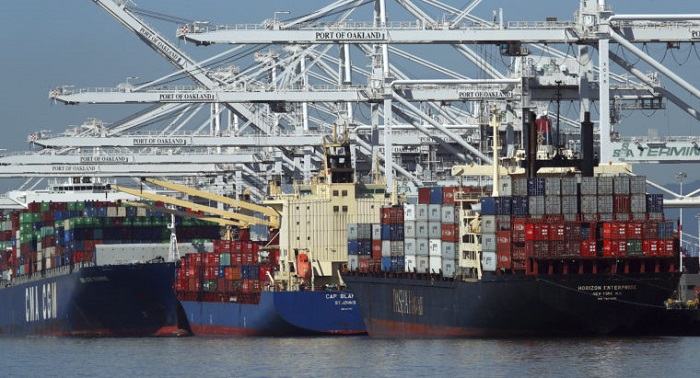

EXISTING FACILITIES OF CHITTAGONG PORT: Chittagong Port (CP) plays a pivotal role in revitalising the economy and for sustained economic growth of Bangladesh through facilitating international trade. The bulk of international trade is generated from the Dhaka-Chittagong corridor where more than a third of the country’s economic activity is located. Built in 1887 near Karnaphuli River, 16 Km upstream of Bay of Bengal, Chittagong Port is an integral part of the sub-regional transport and logistics chain connecting northeastern India, Bhutan and Nepal to Europe, North America and Southeast Asia. The average size container vessels serving the Chittagong port is 2500 TEUs to 3000 TEUs having draft of 9.1 meters (more modernised sea ports are found handling container vessels of 5000-18,000 TEUs)
In Bangladesh, both export and import and regional trade (such as for Nepal, Bhutan, and northeastern Indian states) are handled through two seaports (Chittagong Port and Mongla Port), ten land ports ((Benapole, Burimari, Akhaura, Sonamasjid, Hili, Banglabandha, Teknaf, Bhomra, Bibirbazar, and Nakugaon) and three international airports (Hazrat Shahjalal International Airport, Dhaka, Shah Amanat International Airport, Chittagong, and Osmani International Airport, Sylhet). According to sources, the seaports handle 87 per cent of Bangladesh’s trade, while land ports handle 13 per cent. The Chittagong Port services 79 per cent of Bangladesh’s agricultural imports and exports.
The port is connected with the hinterland by railways, road networks and inland waterways.The dry cargoes from the port are cleared by three modes of transport, viz. rail, road and river, which are approximately 10, 75 & 15 per cent respectively of the total cargo forwarded to the hinterland out of which 60 per ent is bound for the Dhaka area, a large commercial and industrial centre of the country. In 2016, Chittagong Port handled 2.346 million Twenty-Feet Equivalent units (TEUs) of containers having 51.38 million tonnes (MT) of cargo and in 2015, 2.024 million TEUs of containers having more than 50 MT of cargo. It is apprehended that there will be three-fold rise in container traffic in next 15 years. The expected figures are 2.7 million TEUs in 2020 and 5.4 million TEUs in 2040. Major imported commodities are food grains (e.g wheat), cement, fertilizer, coal, salt, sugar and edible oil etc. Government of Bangladesh data notes that the Chittagong Port has general and container berths and jetties for oil, grain, urea, ammonia, fertilizer and dry cargo. The growth of handling of both cargo and container has witnessed a remarkable rise, which indicates the growth of national economy and also warrants upgradation of cargo handling facilities of the ports.