ISLAMABAD: Pakistan needs to develop a clear-cut national-level strategy to pull down pillars of smuggling that causes a loss of billions of rupees to the government coffers.
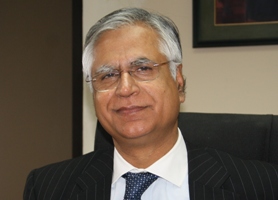
Customs Intelligence and Investigation Director General (DG) Imtiaz Ahmad Khan highlighted this aspect while giving an interview to Customs Today. “It is difficult for a single department to control the menace,” he said, adding that a national action plan will have to be developed to curb smuggling that is ever growing.


The Pakistan Customs will lead the new strategy, while other law enforcement agencies, including Frontier Constabulary, police and Federal Investigation Agency (FIA) will provide assistance in combating smuggling in the country.
In the outgoing fiscal year 2015-16, the Customs Intelligence seized items worth Rs 5.602 billion and the value of items confiscated during preceding year 2014-15 stood at Rs 3.994 billion, he informed. An increase of 42 percent was witnessed in value of the seized items. The department also shared a handsome amount of Rs 1.88 billion through auction of smuggled items and vehicles, he said.
He explained that a special team was formed under the supervision of senior officials to prevent smuggling of cigarettes and non-duty paid vehicles during the outgoing fiscal year. He said that the Customs Intelligence staff impounded 559 vehicles worth Rs 890 million and 3.2 million sticks of cigarettes worth Rs 137.14 million.
The department observed 73 percent increase in the number of vehicles impounded over the preceding financial year 2015, when it had impounded 323 vehicles worth Rs 355 million, he compared, adding that cigarettes worth Rs 77.05 million were confiscated during the said period.
In fiscal year 2016-17, all directorates of the Customs Intelligence and collectorates will assist each other to take action against smuggling following the new plan, he said, adding that all departments concerned were coordinating and sharing information in a better way.
The Customs Intelligence will conduct operations against the smuggling of non-duty paid vehicles with the assistance of police and other enforcement agencies, he informed.
Responding to a query, he said that the Federal Board of Revenue (FBR) had made a committee for save transportation and transit permits which has sent its suggestions and recommendations to the board. Some suggestions have been given to make the process strengthen legally and technically, he said, adding that some of them have been included in finance bill of new fiscal year.
A long-lasting issue of shortage of staff has been resolved to a maximum extent, he said, adding that 110 new sepoys have been inducted, while a process to induct 34 intelligence officers was also underway. Thirty four new sepoys will perform duties at headquarters and others will be appointed in different regions, he explained.
Negotiations for training of newly hired officials were also being held with different law enforcement agencies, he informed, adding that the training of officials will be started soon.
The director general revealed that Afghan Transit Trade was a major source of illegal trade and smuggling into Pakistan, adding that borders were not in control of the customs department. After new induction, some officials will be deputed at borders, he said, adding that the intelligence staff did not exist in Federal Administrative Tribal Areas (FATA).
He further added that information-based operations were being carrying out to curb smuggling in guise of transit trade. There were some impediments in way of conducting random operations against smuggling, he added.
The department was aware of smuggling of foreign origin cloth, tea and cigarettes; therefore, it made numerous seizures of the said items, besides limiting smuggling of oil and diesel through Iran border, he said.
“We have made various big seizures but the FC provided us great assistance to make it possible,” he informed, adding that Directorate of Customs Intelligence, Balochistan has staff of only 25 persons but the FC has 55,000 personnel.
“Keeping in view low resources, I held meetings with IG of four provinces and FC those supported us in the field to achieve better results,” DG Imtiaz said, adding that after meeting with the IGs, orders were passed on to lower staff to yield desired results.