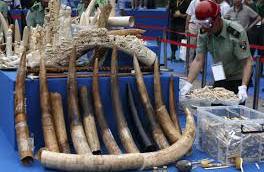


NUMIBE: Researchers are using seized tusks to identify Africa’s poaching hotspots in hopes law enforcement can make use of the information.
A DNA analysis of elephant tusks seized from poachers has revealed two main hotspots for the crime in Africa, a finding that could point law enforcement in the direction of the top criminal networks, a study showed.
The examination involved taking genetic samples from large seizures of ivory and matching them against DNA samples of elephant dung to determine where the animals came from.
It showed most elephants killed on a wide scale lived in southern Tanzania and northern Mozambique in East Africa or in a central Africa region spanning parts of Gabon, Cameroon and the Republic of Congo. The research, published by the Science journal on Thursday, was led by University of Washington biologist Samuel Wasser.
The study has “implications for law enforcement efforts aimed at tackling transnational organised trade in ivory and the increasing poaching of elephants,” according to the report.
As many as 40,000 African elephants were lost to poaching in 2011, a major factor in the illegal wildlife trade that has become the world’s fourth-largest transnational organised crime, according to the study. The wildlife trafficking market is worth an estimated $8 billion to $10 billion a year.
US. Representative Kay Granger, the chairwoman of the House appropriations foreign operations committee, said in an interview on Thursday she views the study’s DNA-based research findings as a potential key new tool against wildlife trafficking that may be worthy of a congressional hearing.

Karachi Port sets 138-year cargo handling record
KARACHI: Pakistan's maritime sector has achieved a major milestone as Karachi Port set a new record in its 138-year history...