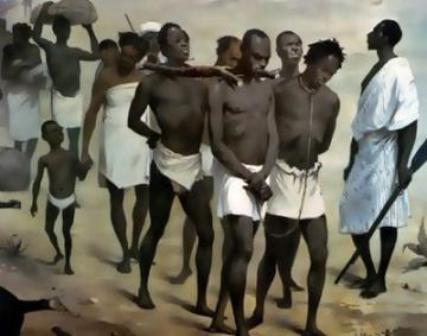
CHAND: In 2010, three bodies were unearthed during construction on the Caribbean island of St. Martin. These three individuals, two male and one female, were believed to have been slaves in the 17th century, when the island was still ruled by the French and Dutch. Scientists and historians had no way to tell where these slaves originated, because records of the slave trade at the time are spotty at best.
By studying the DNA that still remained in the 300 year old teeth, scientists are able to tell what tribes that the slaves were originally taken from, as well as where they might have lived. In the case of the Zoutsteeg Three, scientists determined that one man and the woman were most likely from what is now modern Nigeria and Ghana, where the other man was probably born in northern Cameroon.


This type of genetic tracing is quite different from the kits you can buy online to trace your genetic ancestry. Those tend to focus on a single genetic marker, often a single chromosome. This method, while much quicker and easier for wholesale production, can potentially miss up to half of your genetic history.
A new way to extract and examine DNA was created by a Stanford geneticist named Carlos Bustamante. This technique allows scientists to extract and sequence DNA from damaged, contaminated or ancient samples. The oldest samples obtained to date are from Otzi, a mummy found in an Alpine glacier that dates back more than 5,000 years.
These new genetic sequencing techniques are ideal for tropical areas where the heat and humidity might otherwise damage the genetic material beyond repair, since St. Martin is a very wet and green environment, as opposed to the cold, dry environments where ancient DNA extraction works the best. This could mean the opportunity for new answers from places such as Guadalupe and St. Helena, as well as the remains found in New York in 1990.
Studying the DNA of these ancient people may provide us with a more varied insight into our own pasts.