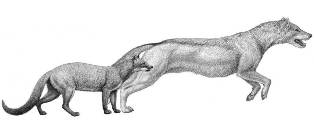


CANADA: It turns out old dogs — prehistoric ones, even — can learn new tricks. It just takes a few million years. A new study of American dog fossils shows that climate change and resulting habitat shifts drove native dogs, originally an ambush predator, to become the relentless trackers and pouncers we see today in wolves.
“It’s reinforcing the idea that predators may be as directly sensitive to climate and habitat as herbivores,” said Brown University’s Christine Janis, who worked on the study, in a news release.
Forty million years ago, a warmer and wetter climate meant a dense, extensive forest over much of what is now the Central Plains of the United States. It was a biome that lent itself to a smaller predator that could spring out of hiding and take down passing prey — which nicely describes native wild dogs of that period.

Karachi Port sets 138-year cargo handling record
KARACHI: Pakistan's maritime sector has achieved a major milestone as Karachi Port set a new record in its 138-year history...